Monday, June 24, 2013

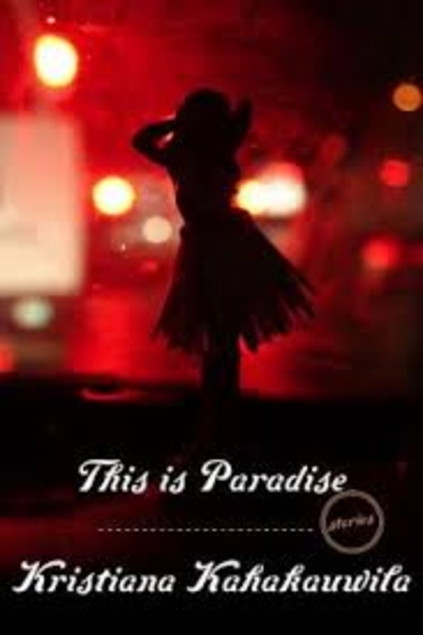
Review: This Is Paradise by Kristiana Kahakauwila

I have a tall stack of short story collections on the "to-read" shelf of my Bookcase of Unread Books. I've read a number of stunning short story collections in the last couple of years. The Girl in the Flammable Skirt, The Lone Surfer of Montana Kansas, Postcards, Natasha and Other Stories. None of them were as gut-wrenching, as multifaceted, as damn good as Kristiana Kahakuwila's This is Paradise.

Across six short stories (really, a couple of them, "This is Paradise" and "Portrait of a Good Father," could stand as novellas), Kahakuwila tracks the difference between outsider, native and local on the Hawaiian islands. This is a topic that has fascinated me for a number of years, since I read Zamora Linmark's Rolling the R's.

Race/ nativeness is a major force in Kahakuwila's Hawaii, though it can be overcome with proper respect and caution. In the title story, a guitar player moves from outsider to local in the course of one well-played song, buttressed by his reverence for his family and for the traditions he inherited from them. At the same time, a young girl is kept outside because she doesn't understand (really, can't begin to imagine) how "Paradise" looks to people who live there all the time and deal with tourists tromping through their home.

At the same time, Kahakuwila strikes universal notes of growth, assuming responsibilities, taking a role in the family in a number of her stories. Most of her characters are physically young, setting out on their lives: the girl on the prowl for a fling in paradise; another girl, an aspiring cockfighter following in her dead father's footsteps; a young man (Hawaiian heritage but a mainlander) preparing to propose to his local Hawaiian girlfriend; the granddaughter at her grandmother's funeral.  The rest are emotionally young: the closeted gay son home to watch his father die; the father and husband and lover who bottles up his emotions so deeply that he fails to be adequate in any role. Her men especially are properly stunted, as befits a hallmark tradition of American literature and film.

This Is Paradise goes on sale in July, and it deserves to be in your must-read pile.

Friday, May 31, 2013

Review: A Matter of Life by Jeffrey Brown

When I was first discovering that there were graphic novels out there that dealt with real life, not superheroes and spandex, but everyday life, one of the best books I came across was Jeffrey Brown's Clumsy. That Clumsy was about the difficulties and awkwardness of long distance relationships  a topic I know a little about, only made it feel more true.

So I was thrilled when the folks over at Top Shelf gave me to the chance to review Jeffrey Brown's A Matter of Life, which comes out next month.

A Matter of Life is about Brown's struggle with religion, his parent's faith and their refusal to reject him despite his rejection of faith. Where Craig Thompson's Blankets is about the breaking of relationships over faith (and, in that way, echoes Portrait of the Artist as a Young Man's bildungsroman), Brown's life never seems particularly ruffled by his decision. Of course, there is some tension and there are awkward moments. But on the whole, Brown's life is happy, good, normal. A normal life isn't usually best-seller material, but when the story is told as honestly as Brown tells it, normal life becomes compelling.

Thursday, April 18, 2013

Review: A Chance to Win by Jonathan Schuppe

When is a book about baseball not a baseball book?

When the book is Jonathan Schuppe's brilliantly realized A Chance to Win. What began as a feature article about a Little League team by a crime reporter turned into a tale of the long struggle to rebuild Newark, NJ. It's a story about the permanent underclass build by draconian drug laws, failed schools, and shattered families. It's a story about the shadow economy created by the shortfalls of the welfare state. Most of all, it's a story about how everyone involved in the generational tragedy that is Newark wants something better, but bereft of viable options, struggle to find a new path.

Rodney Mason is an ex-con, a part-time drug dealer, a onetime standout baseball player rendered paraplegic by a drive-by shooting, and coach of the South Ward Little League's Elizabeth Avenue Eagles.

Schuppe masterfully draws together the Eagles' story, as a Little League team and after. As he establishes a personal connection with Mason, the kids and their families, I couldn't help feeling just as drawn into the experience as he surely was. The families' successes are encouraging, their errors are deflating, and their struggle to stay focused on the future in the midst of a world where life is cheap is inspiring.

This is not the kind of feel-good book that will be made into a movie. The kids are poor. Only a couple have ever played baseball before; they come to their games without equipment and uniforms, and they come lugging all the baggage of poverty. But it's a book about the underdog's hope. It's a great read for spring.

A Chance to Win doesn't come out for sale until May 7th, but you need to put your order in today. It's the best piece of non-fiction you'll read this season.

Monday, March 18, 2013

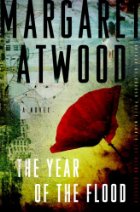
Review: Year of the Flood by Margaret Atwood

On a recent road trip, I brought along Margaret Atwood's stupendous The Year of the Flood unabridged audiobook. It was good- five star, top shelf, rave to your friends until they're sick of hearing about it good.

The Year of the Flood is about the end of the world. While the book's structure is divided between the time before and the time just after a pandemic that pushes the human race to the brink of extinction (the "waterless flood" the novel's religious zealots warn about), human life was over long before the disease's outbreak.

Atwood writes about people trying to build a life in the ruins of civilization. As power and wealth concentrates to the elite few, how do the rest of us forge a life? Can you get a decent job, find a decent place to live, raise a family? Through the eyes of two survivors, Toby and Ren, Atwood shows us a world in which the corrupting power of oligarchy's decadence and self-service rips civilization apart.

Saturday, February 9, 2013

American Pastoral

Philip Roth had received a lot of attention since he announced his retirement. What was especially interesting to me was how he decided to retire: by reading nearly his entire oeuvre in reverse chronological order.

And when he was done, he decided that one of his favorite books is one of my favorites too: American Pastoral.

The plot is deceptively simple: there is a man who was the golden boy of his hometown; the man marries his high school sweetheart, the prom queen, and they have a daughter; in the midst of the 1960's, the daughter gets involved with the Weathermen and blows up a post office; things fall apart.

Thursday, February 7, 2013

The Sound and the Fury

How often do you put off reading a book because it is intimidating? You've been told it's great so often that you find yourself "saving" it for when you're ready.

According to The Modern Library, The Sound and the Fury is the best book of the 20th century that I've never tried to read. So I read it, and I wonder why I felt intimidated for so long.

I have been told that the first chapter of The Sound and the Fury is one of the most difficult pieces of literature ever produced. As a stream-of-consciousness tour-de-force, the fist chapter ranks with Molly Bloom's 80 page sentence in Ulysses and Lily Briscoe's meditations on art in To the Lighthouse.

Careening through the thoughts of a thirty year-old with no sense of time was not easy to read, don't get me wrong. But isn't it fun to be disoriented at the beginning of a book, and then slowly to right yourself? The clues are there, most of them repeated enough times that they were recognizable when they surface in later chapters, restored to their chronological place. It wasn't all that different from watching a movie like Memento or Inception. Coast it out and pay attention; it'll all come together.

Maybe I just love puzzles too much. Because The Sound and the Fury presented such a spectacular little puzzle that when I finished the book, the first thing I wanted to do was pick it up again and re-read that first chapter.

Thursday, January 17, 2013

Review: In Zanesville by Jo Ann Beard

via LibraryThing
Jo Ann Beard's In Zanesville owned my soul this past weekend. Her unnamed narrator, a 14 year old girl, is staggering through a life on the brink of collapse. And Beard's debut novel will haunt and encourage you long after you've put it back on the top shelf of your bookcase.

In Zanesville opens with a simple, horrifying scene: the narrator and her best friend, Felicia (called Flea), are babysitting a family of children, when the oldest boy sets a fire in the bathroom of the family's home. The two girls call the narrator's mother rather than the fire department- mom calls the fire department, and the house is saved.

And then the boy-arsonist's father gets home. The girls watch in stunned silence as the father presses the boy's hand onto the lit stove as punishment.

With that as precedent, the narrator's life isn't so bad.

Monday, December 31, 2012

Class Warfare in The Loneliness of the Long-Distance Runner by Alan Silltoe

from here
There is a war coming. While a war between countries will grab the headlines, it is the war between the classes that is will do the most damage- because the lower classes are growing, the chasm between the bottom and the top is impenetrably deep, and the well-meaning middle class (because they want to avoid the war, or because they don't think war is really necessary) serve as tools of hegemony.

It's hard not to read Alan Sillitoe's The Loneliness of the Long-Distance Runner through the prism of our American fiscal cliff.

In story after story of this slim collection, the lower class Britons on the eve of the Second World War slouch from birth to death. They make terrible choices for lack of options across nine stories: robbery; a fight between a teacher and student; a man kindly assists his ex-wife in drinking herself to death; two boys beg, lie and steal to scrape together enough money to enjoy a fair; a man hangs himself with the help of a young boy; one man alleviates the misery of his life by beating his wife and children, while another exposes himself to little girls.

In the cruelest story of them all, "Uncle Ernest," the title character (a hard working upholsterer) finds joy in his hand-to-mouth existence by caring for two young girls. It's unclear if they needed his care: their mother has a job, and they go to school. When they first meet Ernest, they have the money for the bus ride home from a small cafe. Still, they accept his charity- he goes hungry and runs up debt to buy them tea and sweets. In kindness, he finds companionship and a hollow measure of happiness. The world, of course, punished him for that. A pair of coppers show up, responding to complaints or questions- some people thought the little girls were taking advantage of the old man's generosity. The police, acting on the best behalf of society, accuse him of untoward acts that have never crossed his mind, and they finally fling him into the street with orders to never contact the girls again. Uncle Ernest retreats to a bar, for the only escape society allows him.

This is how the world ends.

Sunday, December 23, 2012

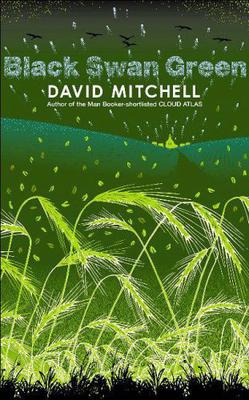
Book Review: Black Swan Green by David Mitchell

from here
I picked up Black Swan Green from our local library's annual book sale. I didn't remember much about it, beyond recalling the title on some "best books of Two Thousand whatever" from a few years ago. I didn't immediately make the connection to Cloud Atlas, also by David Mitchell.

So, it sat on a shelf, waiting to be read. When I needed a book for the flight down to Florida for my grandfather's memorial, I brought it along. And devoured it.

I rave about a lot of the great books I read. Of the books I read this year, The Girl Who Fell from the Sky, Let the Great World Spin, and The Monsters of Templeton all occupy space in a top tier above raving. It's a spot where the material and skill of the author is so strong that it makes spend several days afterwards telling everyone I know about it. They're great books, steeped in their own worlds and messy at the edges in the way real life is. Their stories are tightly woven, but told in a way that is so authentic that we can't see the seams where the author guides us along.

Add Black Swan Green to the list.


Friday, November 16, 2012

Book Review: The Girl Who Fell From the Sky by Heidi W. Durrow

from the author's website

In undertaking a my little New Year's resolution to read 52 book, I expected a fair number of lousy books. And I've learned that writing about several weeks worth of mediocre or merely good one can sap some of the joy from writing. I'm sure that's why bad reviews are often funniest- what else is there really to say?

But writing a review is easy when the book is brilliant. And Heidi W. Durrow's The Girl Who Fell From the Sky is brilliant. The semi-autobiographical 2010 debut novel is about a girl of mixed race, her mother Danish and her father an African American GI, struggling to find her place in the world. Race is the most obvious theme here, closely followed by alcoholism, sexuality, and despair. In most of its handlings of these themes Girl feels like a first book- too often ham handed in tackling the issues head on.

Still, it's hardly a surprise that Barbara Kingsolver chose Girl as the winner of the 2008 PEN/Bellwether prize for a novel addressing social issues; the novels chapters rotate narrators in precisely the way of Kingsolver's Poisonwood Bible.

Tuesday, September 18, 2012

Book Review: Let the Great World Spin by Colum McCann

from here
When I was younger (which may only mean last January when I started this project to read 52 books in 2012) I divided books into those I love, those I like, those I'm indifferent to, and those I actively dislike.

As this project goes on, I find myself liking fewer books, but also disliking fewer books as well. Instead, I begin to see flaws. The best books I've read this year (Asterios Polyp, Cutting for Stone, Death in the AfternoonThe Imperfectionists) have the fewest flaws, which is not to say they are flawless. But their strengths outweigh their weaknesses by a considerable margin.

Colum McCann's Let the Great World Spin started off with several points in the bank: it's set in a city I love (New York City), in a time period I find fascinating (the 1970s, amid the tide of urban blight ready to swallow New York), and in a format I adore (a series of interconnected, only marginally sequential short stories).

McCann builds from there: his stories revolve around Philippe Petit's August 7, 1974, tightrope walk between the Twin Towers. Petit is a reoccurring character, taking a couple chapters for himself, and in some way touching the lives of every other character in the novel.


Thursday, August 9, 2012

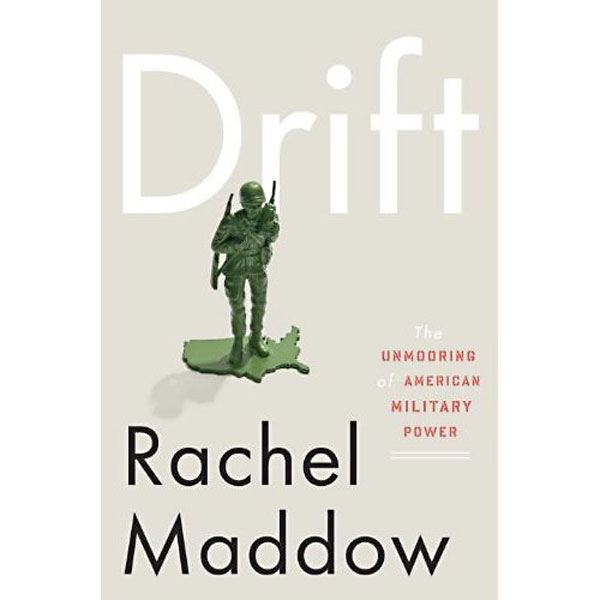
Drift by Rachel Maddow, Book Review

from here
I don't write about politics much here, but Rachel Maddow's brilliant Drift demands that I do.

America is in a weird place in regards to its military right now, and Maddow makes a compelling case that our historical moment is unique and the unintended consequence of a series of well intended decisions.

We have an all volunteer force, a political necessity as part of the post-Vietnam reaction to the draft. But part of the reason that Vietnam War dragged on was because the draft, at that point, had been watered down with exemptions. By allowing so many young men out of military service, we lessened the war's impact at home.

We've continued this trend in the years since: outsourcing security details to mercenaries like Blackwater, issuing stop-loss assignments for members of the National Guard, and acting at home (from a policy perspective) as though we're not at war abroad.

Friday, July 27, 2012

Listening for Earthquakes by Jasmine Dreame Wagner, Book Review

Listening for Earthquakes, Jasmine Dreame Wagner's book of poems published by Caketrain Journal and Press, is a love letter set to everything poetry can be. Alternating stretches of prose with stanza poetry, Wagner must be read like Whitman- the clang of the words mean something to the ears, but the sight of the words on the page are designed to have just as much impact. Wagner delights in shades of ink, and in words located on lines in ways that can't be spoken or performed. You have to see the book, which is itself as much a work of art as the words it contains.

My favorite poem in the collection, "There Is No Part of the Body That Hasn't Been Pierced," demands that the entire book be turned sideways to be read. The Beatitudes that pour off those pages are an affirming and often mind-bending collision of words.

    Blessed are the firecrackers, cherry bombs, snapdragons, for they are 

        the waterworks, sweaty palms, calendulas of sudden vision.
In that poem, Wagner rolls on, exclaiming (not asking with a question mark; these sentence end with a period) of the sun:

    ...how is it not unlike a feather headdress on a mule...


    ...a silk-bound door...

    ...how is it not a stoplight...
from Caketrain Press
Wagner's approach to definition is through the impossible- prove to me the negative, she says over and over again, and then I will be willing to see the world your way.

Listening for Earthquakes is a book about the world as a canvas, about the painful painting we do in it. It is a book filled with bridges and doors and pathways marked by missed connections.


One thing more I love about Wagner's book is that she is not afraid of her stupendous vocabulary. It has been a long time since a book made me read it with a reference at hand, but Listening for Earthquakes is that kind of book. Hepafilter. Filigree. Ameliorates.

Don't read passively, she says. Turn it sideways, crease the spine. Maybe even put the book down so you can grasp at the meaning.


Book 28 of my book-a-week challenge.

Friday, July 20, 2012

Vietnamerica by GB Tran, Book Review

from here
I read graphic novels in hopes of finding ones as good as GB Tran's Vietnamerica.

Vietnamerica is not an easy read, visually nor narratively. I suspect that is why it didn't win the Eisner Award it was nominated for at Comic-Con earlier this week.

Tran's drawing style is broad, really
too universal. In Understanding Comics, Scott McCloud argues that drawn characters fall on a matrix ranging from the universal (think of a smiley face, that could represent anyone) to the specific (imagine a photo-realistic image of someone you know). Tran's characters weren't quite distinct enough to tell apart at times, especially as the story swirls around in time from the French occupation of Vietnam, to the American invasion, to the present day. I loved the way Tran wove together the generational decisions that led him to his American life, but I doubt that most readers have my patience for being confused.

Some of this confusion mirrored a disconnectedness that Tran admits feeling- because his family was not a family of story-tellers, much of the background that colors the decision making is lost to time.

The part of Vietnamerica I enjoyed the most was its open-endedness. I had a choir teacher who used to say "Art is like what life is like." Most acclaimed graphic novel memoirs (I thinking of you, Maus and FunHome and Persepolis) feature some sort of guiding structure, a motif that gives order to reminiscence. Tran's structure is his family, as their words and actions circle back to us: choices were made so the family could survive. We start the book with that reality, and there are no big revelations later on. Vietnamerica reinforces that simple truth over and over again.

Book 27 of my book-a-week challenge.

Saturday, May 26, 2012

Book Review: The Monsters of Templeton by Lauren Groff

In the opening of Lauren Groff's debut novel, The Monsters of Templeton, a prehistoric monster floats to the surface of Glimmerglass lake on the day the narrator (Willie Upton) returns home, pregnant and disappointed in herself. That's the beginning of a novel packed with mysteries to unravel, and loaded with enough mysticism for a season of The Twilight Zone.

from here
I love magical realism for the surprises it promises us. Like sci-fi and fantasy, for magical realism to work the characters must inhabit a self-sustaining world, a place who rules and possibilities are consistent no matter how fantastic they seem. Think of your favorite fantastic television series (I think of Doctor Who and Chuck), and you'll find what holds it together is that the series holds to the rules it has established.

So, The Monsters of Templeton gives us monsters, pyrokenesis and a ghost. But the true monsters are, as always, men. It's more than an exercise of magical realism, it's also a detective novel.

Thursday, April 12, 2012

Review of The Imperfectionists by Tom Rachman, Book 14 of 52

Last weekend, I read Tom Rachman's The Imperfectionists. I haven't tried to give "stars" to books I've reviewed because it seems so arbitrary; not all flaws are equal. But if I ranked books with stars, The Imperfectionists would earn them all.

It's been a while since I read something this good. The plot is simple: The Imperfectionists follows the founding, rise and decline of a small English language newspaper based in Rome through interconnected short stories: each vignette takes us into the personal life of one person associated with the paper.

I'm partial to this narrative approach- I never get sick of any of the characters, and I never tire of the surprises and reveals that each chapter brings. So Rachman scores easy points before I even open the cover.

But this book truly was magical. Each character leads a miserable life or will soon, and by the end of each chapter each character has had a chance to see their life for what it is: an unfulfilling charade. Some accept it, many ignore it, a few strive to change their lives. One by one, each character decides who he wants to be. The obituary writer responds to tragedy by delivering on his untapped potential, a lonely reporter ignores obvious and horrifying truths about her new boyfriend, the nervous possibly neurotic copy editor checks into a hotel room on New Year's Eve pretending to be on a business trip rather than face her empty apartment.

Ignoring the obvious is an important part of life everyone in The Imperfectionists, just as in real life. It straddles the line between poignant and black comedy, a literary genre I adore. 

I get each of those people in horrible and charming ways, and I recognize myself in every character, every chapter. So will everyone who takes the time (treats themselves) to read Rachman's debut novel.

Friday, March 30, 2012

Blankets, by Craig Thompson: Book 12 of 52

After I finished Craig Thompson's Habibi at the end of February, I was left really wanting to re-read his memoir/ "illustrated novel" Blankets. This took a little doing, because I love Blankets. I have bought the book multiple times, and multiple times I have given my copy away to friends, imploring them to fall in love with it, too.

In Understanding Comics, Scott McCloud argues that ones of the choices the artists must make is his level of photo-realism. Most artists could, if they chose, fill their novels with precisely unique faces and bodies, making each page a photograph. But the human mind sees faces everywhere (that is why our emoticons work :-p ).

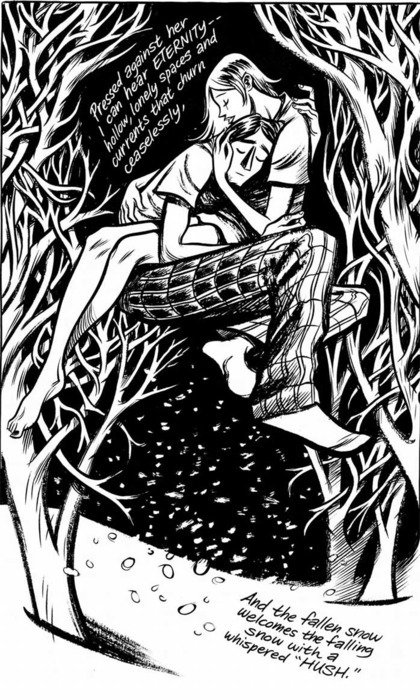
In Blankets, Thompson chooses to skirt a fine line, drawing his characters a little on the ambiguous side; they are clearly human, but who are they precisely? His character, thin-limbed, long faced and large nosed, could be him, judging by his photo on the back cover. But it could be a drawing of me, too. And that's where the magic begins.

From here
After Craig (the character, to distinguish from Thompson the author) and his girlfriend Raina spend a virginal if sexually-charged night together, Craig utters a small prayer, accompanied by the sleep tossed images of a beautiful girl who we know is Raina, but could very well be any girl; in the simple black and white illustrations I defy anyone to conclusively name her hair color:
Pressed against her
I can hear ETERNITY--
hollow, lonely spaces and
creents that churn
ceaselessly,
And the fallen snow
welcomes the falling
snow with a
whispered "HUSH."
What I love about Blankets is how unassuming it is. There are lessons here: hard, painful, familiar lessons about growing up, about faith and parents, about the limits of authority and the limits of our ability to change the world- while Craig is endlessly unresolved about where his life should lead, Raina has already taken on the challenges of motherhood, stepping in with her sister's baby while the sister and husband indulge their materialistic side (they are, in fact, trying to distract themselves from the fact that their marriage will soon fall apart if they don't address their problems head on). But Thompson doesn't beat us over the head with any of those lessons.

Instead, he unfolds this love story, and in unfolding it he gives us glimpses into the traumas that have happened and are continuing to happen to both Craig and Raina. They are doomed but don't know it, and when the inevitable comes, it comes with an honest softness the opposite of the dramatic climax we expect from literature.