When I received an advanced copy of E.L. Doctorow's newest novel, Andrew's Brain from the fine folks at Random House, I was excited.
Although Doctorow's novels have been hit or miss for me (enjoyed Ragtime and The March, loved Book of Daniel, couldn't finished World's Fair), I am always on board with the prospect of unreliable narrators and stories about story-telling. And Andrew's Brain offers us a doozy.
Andrew is a cognitive scientist with a capacity of self-inflicted wounds. He describes himself as a haphazard scholar, an indifferent lover and a compulsive shoot-from-the-hip decision maker. His life work studying the chemical miracle that makes the brain into the mind has left him without the superhuman deductive abilities he thinks such a study should bestow.
One of the things I like most about Andrew's Brain, especially compared to Doctorow's previous work, is the smallness of the cast. No personified masses in this novel; Andrew tells his story to someone he calls "Doc," who might be a psychiatrist or a prison warden or both. Andrew tells us about his two wives, and his two rivals for those women- his first wife's new husband, and his second wife's ex-boyfriend. The story told through dialogue, it has all the self-deprecating humor of Portnoy's Complaint without the sexual sensationalism.
As a small jab at modern literature, my wife and I divide our two bookcases of 20th and 21st century fiction: on the left are the lonely men, on the right are the awesome women. Like Roth's canon, Doctorow's newest work is the interior space of a lonely man, the kaleidoscopic tale he tells himself within the privacy of his head to keep trudging on in the world. Without giving too much away, Andrew's wounds are real, his trauma is rooted in the modern age. Andrew's story is told haphazardly, the punchline sometimes proceeding the joke, the aftermath often shown to us before the decision. It is, I think, about the way we piece our lives together and make sense of ourselves, even when that should be impossible.
Friday, January 10, 2014
Wednesday, January 8, 2014
Giving Up on Goal #2
One thing that is clear to me, is that I was a bit... let us say "overambitious" for my 30 Before 30.
If I had really given the two books their due, they would each have been a separate item on a list of 30. It's not that I couldn't have read these four books within a year, but that I couldn't have read them and still kept up with all my other reading, the new and forthcoming books, the old favorites, the suggestions from friends. I wasn't willing to give that up.
So perhaps Darkness at Noon and Sons and Lovers will make my 31 Before 31.
2. Finish the Modern Library's Top 10 List
I've read six of the top ten in the Modern Library's Top 100. This year, I want to read the other four: Ulysses, The Sound and the Fury, Darkness at Noon, and Sons and Lovers.In the last year, I've read The Sound and the Fury and Ulysses.
If I had really given the two books their due, they would each have been a separate item on a list of 30. It's not that I couldn't have read these four books within a year, but that I couldn't have read them and still kept up with all my other reading, the new and forthcoming books, the old favorites, the suggestions from friends. I wasn't willing to give that up.
So perhaps Darkness at Noon and Sons and Lovers will make my 31 Before 31.
Thursday, December 5, 2013
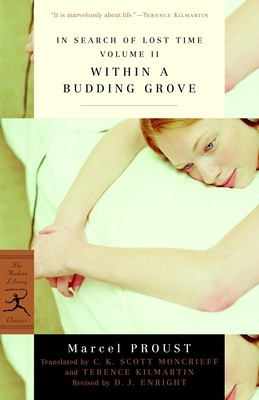
Review: Within a Budding Grove
I finished the second book of In Search of Lost Time over Thanksgiving weekend, and I was struck by its deliberate pace.
The Victorians move their books slowly, and I dislike them for that. Dickens in particular is a long jangle of plot twists that never seem to go anywhere, but Austen and the Brontes, too, move at a snail's pace. There are twenty thousand words for every action.
Proust moves even more slowly, but I enjoy it more. It's not the slowness of action and inaction filling the page, it's that he fills every page with thoughts. What is the narrator thinking, what does he think the person he's talking to is thinking, what is that person actually thinking, and then finally, what do they say to each other?
It's an extraordinary novel, but at times it feels like an exercise. In the same way that Joyce challenges his readers to keep up with him (spattering his pages with references to Greek mythology and the Latin mass), Proust seems to challenge the reader to follow him down the rabbit hole into his own head. His passages on memory and longing for the possible strike me the most.
I'm thankful I have an edition with key plot points summarized, because otherwise I might have become hopelessly lost in the unclear passage of time.
The Victorians move their books slowly, and I dislike them for that. Dickens in particular is a long jangle of plot twists that never seem to go anywhere, but Austen and the Brontes, too, move at a snail's pace. There are twenty thousand words for every action.
Proust moves even more slowly, but I enjoy it more. It's not the slowness of action and inaction filling the page, it's that he fills every page with thoughts. What is the narrator thinking, what does he think the person he's talking to is thinking, what is that person actually thinking, and then finally, what do they say to each other?
It's an extraordinary novel, but at times it feels like an exercise. In the same way that Joyce challenges his readers to keep up with him (spattering his pages with references to Greek mythology and the Latin mass), Proust seems to challenge the reader to follow him down the rabbit hole into his own head. His passages on memory and longing for the possible strike me the most.
I'm thankful I have an edition with key plot points summarized, because otherwise I might have become hopelessly lost in the unclear passage of time.
Monday, October 28, 2013
Review: Daughter of Time by Josephine Tey
When I don't know, I turn to Wikipedia:
I am not a mystery reader, but The Daughter of Time came up in my book club, so I read it.
Most mysteries fall in one of two camps: the transparent mystery, where we know the guilty party by the end of the third chapter and merely mark time until the hero figures it out; or the deus ex machina mystery, where the hero has deduced some vital clue that is withheld from the readers until after the final confrontation (you could also call this The Sherlock).
Daughter of Time is neither of these. Our hero is bedridden, convalescing after being injured while capturing the last baddie. Stuck in his bed, Daughter... breaks one of the cardinals rules of story-telling: almost none of the action happens in front of us. Instead, characters enter the hospital room, tell the hero what's happened and then leave to have more adventures while hero stays home.
In this way, Daughter... has elements of psychological thriller and melodrama. I was far more interested in how the hero handled his incapacitation than I was in the mystery that he was engaged in.
Maybe we live too much in the reality tv era. CSI and Law & Order regularly take their fictional characters into contact with "real world" cases. But I'm sure this must have been a novel approach for a novel in 1951.
Is that what made reviewers hail Daughter... as an instant classic? Or is there something else I'm missing?
In 2012, Peter Hitchens wrote that The Daughter of Time was "one of the most important books ever written."
On its publication Anthony Boucher called the book "one of the permanent classics in the detective field.... one of the best, not of the year, but of all time."
Dorothy B. Hughes also praised it, saying it is "not only one of the most important mysteries of the year, but of all years of mystery".
This book was voted number one in The Top 100 Crime Novels of All Time list by the UK Crime Writers' Association in 1990.But why?
I am not a mystery reader, but The Daughter of Time came up in my book club, so I read it.
Most mysteries fall in one of two camps: the transparent mystery, where we know the guilty party by the end of the third chapter and merely mark time until the hero figures it out; or the deus ex machina mystery, where the hero has deduced some vital clue that is withheld from the readers until after the final confrontation (you could also call this The Sherlock).
Daughter of Time is neither of these. Our hero is bedridden, convalescing after being injured while capturing the last baddie. Stuck in his bed, Daughter... breaks one of the cardinals rules of story-telling: almost none of the action happens in front of us. Instead, characters enter the hospital room, tell the hero what's happened and then leave to have more adventures while hero stays home.
In this way, Daughter... has elements of psychological thriller and melodrama. I was far more interested in how the hero handled his incapacitation than I was in the mystery that he was engaged in.
Maybe we live too much in the reality tv era. CSI and Law & Order regularly take their fictional characters into contact with "real world" cases. But I'm sure this must have been a novel approach for a novel in 1951.
Is that what made reviewers hail Daughter... as an instant classic? Or is there something else I'm missing?
Wednesday, October 23, 2013
Review: Hutch by Shannon and Hannig
While the Pirates rolled over the Reds on Tuesday night, I read Mike Shannon and Scott Hannig's graphic novel biography of Fred Hutchinson, Hutch.
An under-appreciated pitcher in his era, Hutch boasted great command but never racked up enough wins to garner more than a single All-Star appearance. His Tigers teams of baseball's golden age were overshadowed in the American League by the Yankees, who would take the pennant in seven of Hutch's ten seasons. In the only World Series appearance of his career, at age 20, he pitched one inning, gave up a homerun and walked a batter.
Clearly, this is the story of a good man who never stood at the peak of his craft, but who loved the game and worked hard anyway. He'd become a player-manager with the Tigers, and then win Manager of the Year for the Cardinals. Then, he'd lead the Cincinnati Reds to the 1961 pennant. But the Yankees in '61 where the Yankees of Mantle and Maris, and the Reds would lose in five games. That was Hutch's last pennant; in the spring of 1964, he'd share with the world that he was battling lung cancer, and 3 weeks after the end of the season, he died. Baseball would create the Hutch Award in his memory.
Tuesday, October 22, 2013
Ban All the Classic Books
And the Washington Post for the win:
“Squeeze! squeeze! squeeze! all the morning long; I squeezed that sperm till I myself almost melted into it; I squeezed that sperm till a strange sort of insanity came over me; and I found myself unwittingly squeezing my co-laborers’ hands in it, mistaking their hands for the gentle globules. Such an abounding, affectionate, friendly, loving feeling did this avocation beget; that at last I was continually squeezing their hands, and looking up into their eyes sentimentally; as much as to say,- Oh! my dear fellow beings, why should we longer cherish any social acerbities, or know the slightest ill-humor or envy! Come; let us squeeze hands all round; nay, let us all squeeze ourselves into each other; let us squeeze ourselves universally into the very milk and sperm of kindness.Moby Dick
Would that I could keep squeezing that sperm for ever!”
Thursday, October 17, 2013
Review: Ulysses by James Joyces
This is not so much a review of Ulysses (since I've already written about it twice in the last few weeks) as an effort to sum up my feelings as I finished it.
Because I think Ulysses is just about three people whose lives are a mess.
Stephen Dedalus, the young man with life before him but who is unsure of how to grasp it. His friends are unreliable, his finances are in shambles, and he's unable to bring any of his great ideas to fruition.
Leopold Bloom, the older man whose marriage is falling apart because he cannot communicate with his wife. He indulges his appetites (physical, sexual, imaginative) as a way to mask the lack of control he has over his life.
Molly Bloom, left cold by her husband's refusal to sleep with her in the ten years since their son's death.
When Carol and I last re-organized our bookcases, we split most of the fiction between "Lonely Men" and "Awesome Women" because, tongue in cheek, it seems like these could encapsulate all fiction. But here is a book that epitomizes the lonely men. Neither Bloom nor Dedalus can speak their feels to the important people in their lives. Dedalus would not kneel to pray at his mother's deathbed and now she is gone, and his father is too distant. Bloom still grieves for his infant son and cannot come to Molly's bed, and so their marriage dies.
These emotionally stunted men have no examples to draw on, no one to show them a better way of life. But, in Ulysses, Molly is no better off. When she's finally given the room to speak in the book (which is to say, when she is silent and dreaming because she never does really say what she is thinking out loud), she is a whirl of memories and mixed emotions. She is guilty, but she feels (I think, rightly) forced into her action by a decade of Bloom's inaction and grief.
And that's my overwhelming impression of Ulysses: it is a portrait of grief, of the greatness lost to three people who, despite all the words swirling in their heads, can't really speak to the people who care about them.
Because I think Ulysses is just about three people whose lives are a mess.
Stephen Dedalus, the young man with life before him but who is unsure of how to grasp it. His friends are unreliable, his finances are in shambles, and he's unable to bring any of his great ideas to fruition.
Leopold Bloom, the older man whose marriage is falling apart because he cannot communicate with his wife. He indulges his appetites (physical, sexual, imaginative) as a way to mask the lack of control he has over his life.
Molly Bloom, left cold by her husband's refusal to sleep with her in the ten years since their son's death.
When Carol and I last re-organized our bookcases, we split most of the fiction between "Lonely Men" and "Awesome Women" because, tongue in cheek, it seems like these could encapsulate all fiction. But here is a book that epitomizes the lonely men. Neither Bloom nor Dedalus can speak their feels to the important people in their lives. Dedalus would not kneel to pray at his mother's deathbed and now she is gone, and his father is too distant. Bloom still grieves for his infant son and cannot come to Molly's bed, and so their marriage dies.
These emotionally stunted men have no examples to draw on, no one to show them a better way of life. But, in Ulysses, Molly is no better off. When she's finally given the room to speak in the book (which is to say, when she is silent and dreaming because she never does really say what she is thinking out loud), she is a whirl of memories and mixed emotions. She is guilty, but she feels (I think, rightly) forced into her action by a decade of Bloom's inaction and grief.
And that's my overwhelming impression of Ulysses: it is a portrait of grief, of the greatness lost to three people who, despite all the words swirling in their heads, can't really speak to the people who care about them.
Labels:
30 before 30,
books,
literary criticism,
reading,
wonder
Wednesday, October 16, 2013
Ulysses and Intimidation
I would tell friends I was reading Ulysses, and they'd look at me and ask "Why?"
Sort of like climbing Everest, the answer seems (to me) self-evident.
But as I finished Molly's famous chapter over the weekend, I was struck by how misplaced the book's reputation is. The book is profoundly difficult reading; I especially struggled to force myself to slow down and really read the long section presented as dialogue and stage directions. I suppose everyone must have at least one section that makes them want to give up.
But somehow, book lovers tend to conflate "I understood it" with "I enjoyed it." But I feel that not understanding was part of the joy- it's like wonder over the ending to Inception or imagining how a cancelled series like Firefly would have turned out if given the time to develop.
I read it. I loved it. I think I got it, but I might be wrong (more on that tomorrow).
Sort of like climbing Everest, the answer seems (to me) self-evident.
But as I finished Molly's famous chapter over the weekend, I was struck by how misplaced the book's reputation is. The book is profoundly difficult reading; I especially struggled to force myself to slow down and really read the long section presented as dialogue and stage directions. I suppose everyone must have at least one section that makes them want to give up.
But somehow, book lovers tend to conflate "I understood it" with "I enjoyed it." But I feel that not understanding was part of the joy- it's like wonder over the ending to Inception or imagining how a cancelled series like Firefly would have turned out if given the time to develop.
I read it. I loved it. I think I got it, but I might be wrong (more on that tomorrow).
Thursday, October 3, 2013
Ulysses, First Thoughts on a Second Reading
I'm determined to read Ulysses as part of my 30 Before 30. It's one of the 4 books I've never read in the Modern Library's Top 100.
Though it's disingenuous to say I never read Ulysses, because I did read more than half of it during Spring Break of my senior year of college. I read it for fun, so there are plenty of plot points I missed then, and I'm sure there are some I'm still missing, but that's not why I'm reading it.
To read Ulysses for the plot seems a little like listening to Mozart to analyze the chord progression; sure, I could do it, but isn't that missing the larger point?
One of my favorite professors once told me that the proper way to read Joyce's masterpiece is aloud while drinking Jameson or Guinness. He is a wise man.
It's the sounds I love most, the tongue twisters and the smooth sections. But I also love the graphic side of Ulysses too: the headlines that punctuate the scene in the newspaper shop and the end of the second section which becomes a play, complete with dialogue and stage directions. I feel that if James Joyce were alive today, he'd be a big fan of Christopher Ware.
I'm nearly done with the second section, which is where I recall running out of time in college and having to return my copy to the library. This weekend, I dive into uncharted territory in one of the greatest works of literature. Life is such fun.
Though it's disingenuous to say I never read Ulysses, because I did read more than half of it during Spring Break of my senior year of college. I read it for fun, so there are plenty of plot points I missed then, and I'm sure there are some I'm still missing, but that's not why I'm reading it.
To read Ulysses for the plot seems a little like listening to Mozart to analyze the chord progression; sure, I could do it, but isn't that missing the larger point?
One of my favorite professors once told me that the proper way to read Joyce's masterpiece is aloud while drinking Jameson or Guinness. He is a wise man.
It's the sounds I love most, the tongue twisters and the smooth sections. But I also love the graphic side of Ulysses too: the headlines that punctuate the scene in the newspaper shop and the end of the second section which becomes a play, complete with dialogue and stage directions. I feel that if James Joyce were alive today, he'd be a big fan of Christopher Ware.
I'm nearly done with the second section, which is where I recall running out of time in college and having to return my copy to the library. This weekend, I dive into uncharted territory in one of the greatest works of literature. Life is such fun.
Tuesday, October 1, 2013
On Fables and Poems
I've lost my copy of Rudyard Kipling's Just So Stories. Most likely, I've lent it to someone, said, "You have to read this, you'll love it." And it's gone. I need to replace it and re-read it myself.
In many ways, the Just So Stories are the quintessential fables- origin stories that also impart a lesson. How did the elephant get his trunk? Why, by being too nosey (get it?) about what the crocodile had for dinner.
I often think of good poems as fables- little encapsulations of a moment or a feeling. They have an arc, a moral, and (at their best) an impossible moment that just feels right. It is human life distilled to its most essential ingredients.
I think about Robert Frost's Birches, which is one of the poems I've re-read and re-listened to most in my life. The impossible moment is perfect:
I wonder who has my copy of Just So Stories. If I could remember, I could call them up and asked if they ever read it. I wonder if they love the stories' simplicity as much as I do?
In many ways, the Just So Stories are the quintessential fables- origin stories that also impart a lesson. How did the elephant get his trunk? Why, by being too nosey (get it?) about what the crocodile had for dinner.
I often think of good poems as fables- little encapsulations of a moment or a feeling. They have an arc, a moral, and (at their best) an impossible moment that just feels right. It is human life distilled to its most essential ingredients.
I think about Robert Frost's Birches, which is one of the poems I've re-read and re-listened to most in my life. The impossible moment is perfect:
Without this moment, Birches is an old man wishing to be young again- to swing from trees, to have the innocence to believe that the bent birches along the road were brought low by being swung from too often. But because of the plea "May no fate wilfully misunderstand me" this a poem about a man who recognizes that for all life's hardships, for all the broken ice and slow thaws, no life could be better than this one.
I'd like to get away from earth awhile And then come back to it and begin over. 50 May no fate wilfully misunderstand me And half grant what I wish and snatch me away Not to return. Earth's the right place for love: I don't know where it's likely to go better.
I wonder who has my copy of Just So Stories. If I could remember, I could call them up and asked if they ever read it. I wonder if they love the stories' simplicity as much as I do?
Thursday, September 26, 2013
Review: Evil Diva, Volumes I and II
The folks at Angry Viking Press sent me a copy of the first book in their Evil Diva series. Written by Joe Cashman and Peter Menotti, it's drawn by Stephen Hood and "Team Diva." It's fascinating, playing with tv sitcom tropes set in a middle school in the same nimble and bright way that the award winning American Born Chinese did.
Diva is a devil at a high school for angels and devils; like the four houses of Harry Potter's Hogwarts, St. Swithern's School is an impossible thing that functions for the sake of the story. It gives our devil a place where she can be too good. Luckily, she's quickly taken under the wing of the school guidance councilor, Virgil, who passes on a mysterious wand. Family friendly hijinx ensue as Diva begins a secret life as a do-gooding superhero, while also searching for a chance to "do things her own way" in her real life. The book cliff-hangs to promise many future installments as Diva works around the expectations of the other characters in the story and finds her own place in the world.
Thursday, September 19, 2013
Review: This Side of Paradise by F. Scott Fitzgerald
I've never loved The Great Gatsby. I have not yet seen the movie, though I might once it's on Netflix. Unlike one of my friends, I do not have a tattoo of the famous green light.
But Fitzgerald is so often held up as the epitome of his genre, and at a certain point it's hard to consider yourself a fan of 20th century American literature, particularly a fan of the literature that explores the construction of masculinity, if you've never picked up more of Fitzgerald than Gatsby and a few odd short stories.
This Side of Paradise left me cold, which I found charming. We are not supposed to like Amory Blaine, the brilliant but erratic con-man in training who is the novel's anti-hero. Money and power are the central movers of Amory's world, and the two spin around each other like water down a drain. The pursuit of both syphons all kindness from Amory, especially when his focus is power over the women he pursues.
Why would I like this book? It's misogynistic, materialistic, mean spirited. Amory is self-involved and self-aggrandizing. But I found This Side of Paradise funny.
I read it ironically, as a man in the 21st century should. Like Main Street (published the same year) or The Damnation of Theron Ware (written in 1896), Fitzgerald's characters are too much larger than life to be believable in the realist/ naturalist tradition. And, like other great works of satire, it robs the protagonist of any lasting triumphs.
But Fitzgerald is so often held up as the epitome of his genre, and at a certain point it's hard to consider yourself a fan of 20th century American literature, particularly a fan of the literature that explores the construction of masculinity, if you've never picked up more of Fitzgerald than Gatsby and a few odd short stories.
This Side of Paradise left me cold, which I found charming. We are not supposed to like Amory Blaine, the brilliant but erratic con-man in training who is the novel's anti-hero. Money and power are the central movers of Amory's world, and the two spin around each other like water down a drain. The pursuit of both syphons all kindness from Amory, especially when his focus is power over the women he pursues.
Why would I like this book? It's misogynistic, materialistic, mean spirited. Amory is self-involved and self-aggrandizing. But I found This Side of Paradise funny.
I read it ironically, as a man in the 21st century should. Like Main Street (published the same year) or The Damnation of Theron Ware (written in 1896), Fitzgerald's characters are too much larger than life to be believable in the realist/ naturalist tradition. And, like other great works of satire, it robs the protagonist of any lasting triumphs.
Thursday, September 12, 2013
Review: Nine Years Under by Sheri Booker
I spent a long time reading Sheri Booker's Nine Years Under, and now I've spent nearly as long thinking about what to say about it.
Booker's prose is fluid and engaging. Her promise as a writer is immense, but her story didn't engage me the way I wanted it to. Maybe because I read A Chance to Win, and it is such a great book about inner city life, that I wished for too much from Booker.
First, she has the disadvantage of being a memoirist and limited to her own story, as opposed to a reporter/ biographer who has multiple story lines to choose from.
Second, perhaps Booker's publicist did her a disservice by promising
What was most missing from Nine Years Under was what I thought was its most obvious angle: Booker's parents. Her mother appears as half a character; she is her cancer, appearing only in horrid cycles of remission and recurrence. Her father is a presence but not a character. He's a Baltimore cop who can't watch The Wire because it hits too close to home, who has dedicated his life to make sure his daughter makes it out. But he never speaks, never offers advice or counsel.
Without her family, the characters of her life are limited to the funeral home's major players. But their interactions seem too limited to truly fill the surrogate family roles Booker assigns them. What was perhaps a compelling story in a 10,000 word magazine feature because drawn out and overwrought in a 300 page memoir.
Perhaps, in another few years, we'll see a second installment from Booker. I'd read it.
![]() |
| from here |
First, she has the disadvantage of being a memoirist and limited to her own story, as opposed to a reporter/ biographer who has multiple story lines to choose from.
Second, perhaps Booker's publicist did her a disservice by promising
With AIDS and gang violence threatening to wipe out a generation of black men, Wylie was never short on business. As families came together to bury one of their own, Booker was privy to their most intimate moments of grief and despair. But along with the sadness, Booker encountered moments of dark humor: brawls between mistresses and widows, and car crashes at McDonald’s with dead bodies in tow. While she never got over her terror of the embalming room, Booker learned to expect the unexpected and to never, ever cry.While all those things are evident in Booker's memoir, they never feel like they take center stage; they are scenery, but the play is about a young girl struggling through the process of growing up, through having and leaving a beloved first job.
What was most missing from Nine Years Under was what I thought was its most obvious angle: Booker's parents. Her mother appears as half a character; she is her cancer, appearing only in horrid cycles of remission and recurrence. Her father is a presence but not a character. He's a Baltimore cop who can't watch The Wire because it hits too close to home, who has dedicated his life to make sure his daughter makes it out. But he never speaks, never offers advice or counsel.
Without her family, the characters of her life are limited to the funeral home's major players. But their interactions seem too limited to truly fill the surrogate family roles Booker assigns them. What was perhaps a compelling story in a 10,000 word magazine feature because drawn out and overwrought in a 300 page memoir.
Perhaps, in another few years, we'll see a second installment from Booker. I'd read it.
Thursday, September 5, 2013
Nabokov's Lecture on Proust
Today, I was re-reading Nabokov's lecture on Remembrance of Things Past, in his Lectures on Literature.
I was reminded what a joy it is to read concise but elegant meditations on fiction. Most criticism, especially most post-modern criticism, is (for someone like me- ie., interested but not terribly invested) a labor. Too much "grounding" of the work in tracts of philosophy and pseudo-psychoanalysis leaves the book complete untethered from the reading experience.
One thing I like about Nabokov's lectures is his willing to make sweeping assertions and then back them up with anecdotes from the novel in question. I think that if only someone had handed me his lectures in high school or as an undergrad and told me, "This is how you're supposed to write," then I might have been a far more successful student.
I was reminded what a joy it is to read concise but elegant meditations on fiction. Most criticism, especially most post-modern criticism, is (for someone like me- ie., interested but not terribly invested) a labor. Too much "grounding" of the work in tracts of philosophy and pseudo-psychoanalysis leaves the book complete untethered from the reading experience.
One thing I like about Nabokov's lectures is his willing to make sweeping assertions and then back them up with anecdotes from the novel in question. I think that if only someone had handed me his lectures in high school or as an undergrad and told me, "This is how you're supposed to write," then I might have been a far more successful student.
Wednesday, August 28, 2013
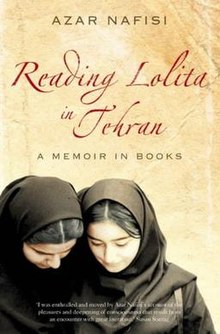
Reading Lolita in Tehran by Azar Nafisi
I dragged myself through Reading Lolita in Tehran by Azar Nafisi as part of the Freshman Reading Experience at the school where I work. The students I met with didn't even make it that far.
I wonder a lot about this book. The students Dr. Nafisi spend so much time with are obviously important to her. And, from a sociological standpoint, their struggle to create a personal space in the midst of one of the most oppressive regimes on Earth certainly has value.
But Dr. Nafisi's attempt to bring that struggle to life through the works of Nabokov, Fitzgerald, Austen and James left me cold. Reading Lolita in Tehran struggled to find its own identity- not quite enough about books and their ideas to captivate me, not quite enough a personal memoir to become open and accessible. Perhaps it is the most accessible book of its kind, but that is being damned by faint praise.
The thing RLiT lacked most was a definitive moment of choice. It was, instead, a study in the daily struggle of life in a totalitarian state. Of course, this makes it true in a way literature can rarely afford to be true. I think of Saul Bellow's Dangling Man as the distillation of the Superfluous Man, and in RLiT, Nafisi repeatedly refers to herself as "irrelevant," a superfluous woman in a country violently opposed to her kind of womanhood.
This lack of "moment" christalyzed into repetition and self-referentialism. Some of her stories are repeated with little variation. Some of her ideas (like her irrelevance) are referenced several times before they are expanded on and explained. While the book mostly flows forwards chronologically, it takes occasional leaps that make it difficult to follow.
It didn't help my experience that I listened to most of the book while taking a trip for work. The audiobook is atrocious; the narrator speaks so slowly that the less than 400 pages of the book take 16 hours to trudge through.
I wonder a lot about this book. The students Dr. Nafisi spend so much time with are obviously important to her. And, from a sociological standpoint, their struggle to create a personal space in the midst of one of the most oppressive regimes on Earth certainly has value.
But Dr. Nafisi's attempt to bring that struggle to life through the works of Nabokov, Fitzgerald, Austen and James left me cold. Reading Lolita in Tehran struggled to find its own identity- not quite enough about books and their ideas to captivate me, not quite enough a personal memoir to become open and accessible. Perhaps it is the most accessible book of its kind, but that is being damned by faint praise.
The thing RLiT lacked most was a definitive moment of choice. It was, instead, a study in the daily struggle of life in a totalitarian state. Of course, this makes it true in a way literature can rarely afford to be true. I think of Saul Bellow's Dangling Man as the distillation of the Superfluous Man, and in RLiT, Nafisi repeatedly refers to herself as "irrelevant," a superfluous woman in a country violently opposed to her kind of womanhood.
This lack of "moment" christalyzed into repetition and self-referentialism. Some of her stories are repeated with little variation. Some of her ideas (like her irrelevance) are referenced several times before they are expanded on and explained. While the book mostly flows forwards chronologically, it takes occasional leaps that make it difficult to follow.
It didn't help my experience that I listened to most of the book while taking a trip for work. The audiobook is atrocious; the narrator speaks so slowly that the less than 400 pages of the book take 16 hours to trudge through.
Thursday, July 25, 2013
Review: Swann's Way by Marcel Proust
It's been nearly 3 weeks since I finished the first book of Marcel Proust's masterpiece, In Search of Lost Time. I enjoyed Swann's Way, but I did not love it. The first 100 pages or so were a slog.
When I rail against the Victorians, I often forget that the early 20th century was still chock full of Victorian values and ideals... and ideas about what makes good writing.
I suppose what separates the great works of the 19th century from those of the 21st century revolves around immediacy. The Victorian ideal was the slow build to the big reveal. Think about Scrooge standing over his own grave, the remorse of Frankenstein's monster, and the mad wife in Mr. Rochester's attic. Proust's novel might be the ultimate in Victorian fiction.
When I rail against the Victorians, I often forget that the early 20th century was still chock full of Victorian values and ideals... and ideas about what makes good writing.
I suppose what separates the great works of the 19th century from those of the 21st century revolves around immediacy. The Victorian ideal was the slow build to the big reveal. Think about Scrooge standing over his own grave, the remorse of Frankenstein's monster, and the mad wife in Mr. Rochester's attic. Proust's novel might be the ultimate in Victorian fiction.
Wednesday, July 17, 2013
Review: The Magic Barrel by Bernard Malamud
Bernard Malamud's first short story collection, The Magic Barrel, won the 1959 National Book Award. Does that make it a great book?
I am drawn to 20th and 21st century male writers, especially to Americans. In part, this must reflect the sexism of the publishing industry, especially early in the century. Partly, it must reflect a prejudice that I have (that most boys must have, or else why would the psuedonyms JK Rowling and SE Hinton and Franklin W. Dixon exist?).
In half-jest, when I last re-organized and pruned my books, I filled an entire bookcase with books about lonely men. Roth and Hemingway and Miller and Coetzee and Faulkner.
But I was disappointed by the lonely men populating Malamud's thirteen stories. Even those who have women in their lives don't know how to allow themselves to be helped. The women are either at home with the children ("Behold the Key"), harping about money ("The Bill"), laying in bed dying ("Angel Levine"), or prizes to be idealize, won or discarded ("The Magic Barrel," "The Lady of the Lake," and "The Girl of My Dreams," respectively).
I am drawn to 20th and 21st century male writers, especially to Americans. In part, this must reflect the sexism of the publishing industry, especially early in the century. Partly, it must reflect a prejudice that I have (that most boys must have, or else why would the psuedonyms JK Rowling and SE Hinton and Franklin W. Dixon exist?).
In half-jest, when I last re-organized and pruned my books, I filled an entire bookcase with books about lonely men. Roth and Hemingway and Miller and Coetzee and Faulkner.
But I was disappointed by the lonely men populating Malamud's thirteen stories. Even those who have women in their lives don't know how to allow themselves to be helped. The women are either at home with the children ("Behold the Key"), harping about money ("The Bill"), laying in bed dying ("Angel Levine"), or prizes to be idealize, won or discarded ("The Magic Barrel," "The Lady of the Lake," and "The Girl of My Dreams," respectively).
Thursday, July 11, 2013
Review: The Twits by Roald Dahl
Children's books have been a car ride staple for our last few road trips, and on our recent trip down to North Carolina, we brought along Roald Dahl's The Twits.
It's a story about a truly awful husband and wife, who torment each other with horrid pranks. They also keep a family of monkey's prisoner and force them to stand on their heads all day long.
The great moment comes early in the book- Mr. Twit convinces Mrs. Twit that she has "The Shrinks." By gluing extra lengths of wood to her cane and chair each day, he tricks her into believing she is shrinking- that her head is collapsing into her neck, her neck into her body, her body into her legs; and that all that will be left of her is her shoes. This is revealed to be a lie, and Mrs. Twit plots her own revenge.
At the end of the book, after all the tricks and plots and plans, the neighborhood birds team up to destroy the Twits. The birds do it by attaching all the Twits' furniture to the ceiling, convincing the Twits that they need to stand on their heads in order to get right-way up. Once the Twits are standing on their heads, they are crushed under their own weight- their heads collapse into their necks, necks into torso, torso into legs.
The axiom runs that we are what we repeated do, and the Twits constant evil brought that evilness back to them. It's the very definition of poetic justice. Plus it was laugh out loud funny.
It's a story about a truly awful husband and wife, who torment each other with horrid pranks. They also keep a family of monkey's prisoner and force them to stand on their heads all day long.
The great moment comes early in the book- Mr. Twit convinces Mrs. Twit that she has "The Shrinks." By gluing extra lengths of wood to her cane and chair each day, he tricks her into believing she is shrinking- that her head is collapsing into her neck, her neck into her body, her body into her legs; and that all that will be left of her is her shoes. This is revealed to be a lie, and Mrs. Twit plots her own revenge.
At the end of the book, after all the tricks and plots and plans, the neighborhood birds team up to destroy the Twits. The birds do it by attaching all the Twits' furniture to the ceiling, convincing the Twits that they need to stand on their heads in order to get right-way up. Once the Twits are standing on their heads, they are crushed under their own weight- their heads collapse into their necks, necks into torso, torso into legs.
The axiom runs that we are what we repeated do, and the Twits constant evil brought that evilness back to them. It's the very definition of poetic justice. Plus it was laugh out loud funny.
Wednesday, July 3, 2013
Retiring Writers
The tradition has always been for writers to die at their desks. Kafka, Dickens, Proust, Hemmingway- all left manuscripts and last works laying around.
In announcing her retirement, Alice Monro mentions the recent retirement of Philip Roth.
I wonder, though, if in the back of their minds, these great writers who have walked away from their craft haven't remembered the example of all those dead writers who left work unfinished. It is, I think, natural to want some control over history's final analysis. Roth has retired to work more closely with his biographer; he is giving himself time to answer the questions- why this version and not that?; what do you think of this character 20, 30, 50 years later?; what scene would you like to revise?
As I am reading Proust in English, I am keenly aware of the complications death can impose on a story. Of the seven volumes, Proust was only able to oversee publication of the first four. The sixth book of In Search of Lost Time has been especially revised based on the discovery of multiple manuscripts and typesets. The books were translated into English by CK Scott Moncrief, who promptly died before finishing the translation of the seventh book. The Terence Kilmartin edition I'm reading is a re-translation of the translation of a work that was never finished.
I imagine Monro and Roth are happy to avoid that mess, too.
In announcing her retirement, Alice Monro mentions the recent retirement of Philip Roth.
Ms. Munro said she was encouraged by the example of Philip Roth, who declared that he was done last fall, as he was getting ready to turn 80. “I put great faith in Philip Roth,” she said, adding, “He seems so happy now.”Writing is demanding. It requires a constant dissatisfaction with past and current work, an unwillingness to ever believe that you've said it quite right. Why wouldn't you want to give that up?
I wonder, though, if in the back of their minds, these great writers who have walked away from their craft haven't remembered the example of all those dead writers who left work unfinished. It is, I think, natural to want some control over history's final analysis. Roth has retired to work more closely with his biographer; he is giving himself time to answer the questions- why this version and not that?; what do you think of this character 20, 30, 50 years later?; what scene would you like to revise?
As I am reading Proust in English, I am keenly aware of the complications death can impose on a story. Of the seven volumes, Proust was only able to oversee publication of the first four. The sixth book of In Search of Lost Time has been especially revised based on the discovery of multiple manuscripts and typesets. The books were translated into English by CK Scott Moncrief, who promptly died before finishing the translation of the seventh book. The Terence Kilmartin edition I'm reading is a re-translation of the translation of a work that was never finished.
I imagine Monro and Roth are happy to avoid that mess, too.
Monday, June 24, 2013
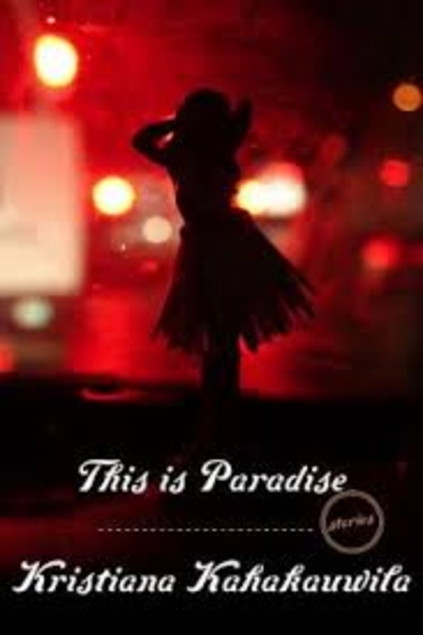
Review: This Is Paradise by Kristiana Kahakauwila
I have a tall stack of short story collections on the "to-read" shelf of my Bookcase of Unread Books. I've read a number of stunning short story collections in the last couple of years. The Girl in the Flammable Skirt, The Lone Surfer of Montana Kansas, Postcards, Natasha and Other Stories. None of them were as gut-wrenching, as multifaceted, as damn good as Kristiana Kahakuwila's This is Paradise.
Across six short stories (really, a couple of them, "This is Paradise" and "Portrait of a Good Father," could stand as novellas), Kahakuwila tracks the difference between outsider, native and local on the Hawaiian islands. This is a topic that has fascinated me for a number of years, since I read Zamora Linmark's Rolling the R's.
Race/ nativeness is a major force in Kahakuwila's Hawaii, though it can be overcome with proper respect and caution. In the title story, a guitar player moves from outsider to local in the course of one well-played song, buttressed by his reverence for his family and for the traditions he inherited from them. At the same time, a young girl is kept outside because she doesn't understand (really, can't begin to imagine) how "Paradise" looks to people who live there all the time and deal with tourists tromping through their home.
At the same time, Kahakuwila strikes universal notes of growth, assuming responsibilities, taking a role in the family in a number of her stories. Most of her characters are physically young, setting out on their lives: the girl on the prowl for a fling in paradise; another girl, an aspiring cockfighter following in her dead father's footsteps; a young man (Hawaiian heritage but a mainlander) preparing to propose to his local Hawaiian girlfriend; the granddaughter at her grandmother's funeral. The rest are emotionally young: the closeted gay son home to watch his father die; the father and husband and lover who bottles up his emotions so deeply that he fails to be adequate in any role. Her men especially are properly stunted, as befits a hallmark tradition of American literature and film.
This Is Paradise goes on sale in July, and it deserves to be in your must-read pile.
Across six short stories (really, a couple of them, "This is Paradise" and "Portrait of a Good Father," could stand as novellas), Kahakuwila tracks the difference between outsider, native and local on the Hawaiian islands. This is a topic that has fascinated me for a number of years, since I read Zamora Linmark's Rolling the R's.
Race/ nativeness is a major force in Kahakuwila's Hawaii, though it can be overcome with proper respect and caution. In the title story, a guitar player moves from outsider to local in the course of one well-played song, buttressed by his reverence for his family and for the traditions he inherited from them. At the same time, a young girl is kept outside because she doesn't understand (really, can't begin to imagine) how "Paradise" looks to people who live there all the time and deal with tourists tromping through their home.
At the same time, Kahakuwila strikes universal notes of growth, assuming responsibilities, taking a role in the family in a number of her stories. Most of her characters are physically young, setting out on their lives: the girl on the prowl for a fling in paradise; another girl, an aspiring cockfighter following in her dead father's footsteps; a young man (Hawaiian heritage but a mainlander) preparing to propose to his local Hawaiian girlfriend; the granddaughter at her grandmother's funeral. The rest are emotionally young: the closeted gay son home to watch his father die; the father and husband and lover who bottles up his emotions so deeply that he fails to be adequate in any role. Her men especially are properly stunted, as befits a hallmark tradition of American literature and film.
This Is Paradise goes on sale in July, and it deserves to be in your must-read pile.
Subscribe to:
Posts (Atom)