A couple weekends ago I dragged my friends to a local production of The Fantasticks.
I'd never seen it, which is most of why I wanted to go. I wouldn't claim to have seen every musical that's worked its way into community theatre level repertoire, but I've seen most of them. The Fantasticks is probably the most famous one that comes immediately to mind (A Funny Thing Happened on the Way to the Forum is now the frontrunner).
At this point, I want to say "It was fantastic," but that would be punny, and I wouldn't do that.
It was joyous. The first act was deft: a musical about the tropes of musicals in the way that How I Met Your Mother is a tv show about sitcoms. Maybe that wasn't the way it was written back in 1960, but that's the way it plays to me in 2013. The impossible happens; really it's expected and accepted, and we're going to sing about it. The actors mostly covered their fault with enthusiasm and clear diction, but the show really drew me in.
Thursday, April 4, 2013
Thursday, March 7, 2013
5 Great Movies I've Never Seen
There are a lot of famous movies I've never seen: Gone with the Wind, Raging Bull, Psycho, One Flew Over the Cuckoo's Nest. Which is why I made seeing some of these movies one of the goals of my 30 Before 30.
They say you have to know what you don't know, before you can really learn about it.
I've got some friends joining me for this challenge, and we decided we should focus on movies that none of us have seen.
1. Doctor Zhivago
2. Citizen Kane
3. On the Waterfront
4. Lawrence of Arabia
5. All Quiet on the Western Front
That's 24 Oscars and a ton of movie history.
They say you have to know what you don't know, before you can really learn about it.
I've got some friends joining me for this challenge, and we decided we should focus on movies that none of us have seen.
1. Doctor Zhivago
2. Citizen Kane
3. On the Waterfront
4. Lawrence of Arabia
5. All Quiet on the Western Front
That's 24 Oscars and a ton of movie history.
Thursday, February 7, 2013
The Sound and the Fury
How often do you put off reading a book because it is intimidating? You've been told it's great so often that you find yourself "saving" it for when you're ready.
According to The Modern Library, The Sound and the Fury is the best book of the 20th century that I've never tried to read. So I read it, and I wonder why I felt intimidated for so long.
I have been told that the first chapter of The Sound and the Fury is one of the most difficult pieces of literature ever produced. As a stream-of-consciousness tour-de-force, the fist chapter ranks with Molly Bloom's 80 page sentence in Ulysses and Lily Briscoe's meditations on art in To the Lighthouse.
Careening through the thoughts of a thirty year-old with no sense of time was not easy to read, don't get me wrong. But isn't it fun to be disoriented at the beginning of a book, and then slowly to right yourself? The clues are there, most of them repeated enough times that they were recognizable when they surface in later chapters, restored to their chronological place. It wasn't all that different from watching a movie like Memento or Inception. Coast it out and pay attention; it'll all come together.
Maybe I just love puzzles too much. Because The Sound and the Fury presented such a spectacular little puzzle that when I finished the book, the first thing I wanted to do was pick it up again and re-read that first chapter.
According to The Modern Library, The Sound and the Fury is the best book of the 20th century that I've never tried to read. So I read it, and I wonder why I felt intimidated for so long.
I have been told that the first chapter of The Sound and the Fury is one of the most difficult pieces of literature ever produced. As a stream-of-consciousness tour-de-force, the fist chapter ranks with Molly Bloom's 80 page sentence in Ulysses and Lily Briscoe's meditations on art in To the Lighthouse.
Careening through the thoughts of a thirty year-old with no sense of time was not easy to read, don't get me wrong. But isn't it fun to be disoriented at the beginning of a book, and then slowly to right yourself? The clues are there, most of them repeated enough times that they were recognizable when they surface in later chapters, restored to their chronological place. It wasn't all that different from watching a movie like Memento or Inception. Coast it out and pay attention; it'll all come together.
Maybe I just love puzzles too much. Because The Sound and the Fury presented such a spectacular little puzzle that when I finished the book, the first thing I wanted to do was pick it up again and re-read that first chapter.
Labels:
30 before 30,
art,
books,
literature,
reading,
topshelf,
wonder
Tuesday, January 22, 2013
Maus by Art Spiegelman
Art Spiegelman's Maus was one of the most difficult graphic novels I've ever read.
Not difficult because of the subject material- though it's hard to think of a book about the Holocaust as light reading.
Maus is hard to read because it's literarily hard to read. The colorless frames have very little gray; what might seem to be gray at first glance is in fact minutely cross-hatched black and white. This leaves the eye (or, at least, my eye) very little time to rest.
As a story about storytelling, hardly a frame goes by without a word in it, and in most frames, the words overlow. The dialogue bubbles interfere with the images; there's just not enough room for the words and images to co-exist. If that's not trouble enough, Spiegelman's hand printed writing slants and tumbles just enough to make it impossible to scan. Every page is a labor (and maybe it's supposed to be that way).
While the anthropomorphized animals might give a reader the emotional distance to deal with the tragedy (and while Jews-as-mice, Nazis-as-cats motif might help a grade school student keep track of good guys and bad guys), the truth is that none of the main characters are drawn distinctly enough to help me keep track of who's talking to whom across the disjointed and often interrupted narrative. Spiegelman's play on traditional expectations of animals in comics was subversive at the time (compare these Holocaust surviving mice to Donald Duck, Mighty Mouse and Garfield), the artifice doesn't hold up. Comics have come a long way in being appreciated as an artform since Maus won the Pulitzer Prize in 1992.
Am I harder on Maus than on so many other graphic novels because of how highly recognized and praised it is? Yeah, probably.
I mean, Maus has everything I love in a novel.
Monday, January 21, 2013
Selling Books and the Awards Circuit
The New York Times does not allow its sportswriters to vote for player awards like induction into the Hall of Fame, MVP or Rookie of the Year. The Times' standing position is that their reports should be covering the news, not helping create it. I think this approach is terribly naive, in that it ignores the "create the news" aspect of choosing which topics are news-worthy and which are not.
Award ceremonies are, at their essence, a celebration of self by the participants. The Oscars, the Tonys, the Emmys, all are designed to draw the attention of the New York Times and the rest of the press, creating news meant to sway an increasingly distracted and fickle public audience.
So it's no surprise that the National Book Awards have re-imagined themselves in a way that will spread more attention to more authors. That means more shiny medallions on book covers drawing the attention of people like me who do still occasionally browse for books in brick and mortar stores.
I'm a little bothered when someone like Morgan Entrekin, vice president of the National Book Foundation boardand CEO of Grove/Atlantic, says
Award ceremonies are, at their essence, a celebration of self by the participants. The Oscars, the Tonys, the Emmys, all are designed to draw the attention of the New York Times and the rest of the press, creating news meant to sway an increasingly distracted and fickle public audience.
So it's no surprise that the National Book Awards have re-imagined themselves in a way that will spread more attention to more authors. That means more shiny medallions on book covers drawing the attention of people like me who do still occasionally browse for books in brick and mortar stores.
I'm a little bothered when someone like Morgan Entrekin, vice president of the National Book Foundation boardand CEO of Grove/Atlantic, says
I think there are plenty of awards that recognize [a collection of stories by a university press]... If one of those books is truly the best book of the year, that's no problem. But it seemed like the judges had been recognizing lesser-known authors for the sake of choosing lesser-known authors.
Sunday, January 20, 2013
How to Stay Present
| The Bride Stripped Bare By Her Bachelors, Even |
It seems silly that I made a decision to turn off my phone. It seems silly: there was literally no where on Earth I'd rather have been at that moment. It seems silly: I'm as annoyed by people on their cell phones in public places as everyone else.
But, I'm susceptible to the incessant buzz.
Is it the same sort of faulty logic that makes us think the grass is always greener on the other side of the fence? The way that constant reminders of other people's apparent happiness can make us think that the whole world is having a better time than we are?
Tuesday, January 15, 2013
An Unexpected Journey: Hating On The Hobbit
| from here |
Maybe Peter Jackson really does have more to say through these characters; I think his role as director is not just transcriber of the films, but as translator- maintaining the intention of the original while imbuing the work with his own cadence.I enjoyed the "translation" of the first section. It lagged, make no mistake- I have no idea how the studio will eventually release its inevitable Director's Cut of The Hobbit, because it already feels stuffed with every detail and slow camera pan that Jackson could find. I enjoyed it, but it was so much less than it could have been.
Saturday, January 12, 2013
30 Before 30 Bucket List
1. Read In Search of Lost Time (A Remembrance of Things Past)
In Fun Home, Alison Bechdel writes "It's said, after all, that people reach middle age the day they realize they're never going to read Remembrance of Things Past." That quote struck a nerve with me, and once I decided that 2013 would be my year for Remembrance... the rest of this list started to take shape.
Labels:
30 before 30,
art,
baseball,
board games,
books,
cooking,
graphic novels,
gym,
hope,
literature,
money,
movies,
music,
poetry,
reading,
real life,
the blog,
travel,
tv,
writing
Tuesday, October 16, 2012
When We Talk About Mental Disorders in Fiction
When I listen to music, I've found, I alternate between two kinds of favorite musicians. I love bands with multiple voices, who alternate the lead, who create music with tight harmonies- Barenaked Ladies, the Weepies, Slow Club. Or I love male singers who who are better writers than singers: Bruce Springsteen, James McMurtry, to a lesser extent Jackson Browne.
It's my preference, and it leaves me blind to the value of plenty of other performers. Most female soloists, especially pop singers who hit the high notes, do nothing for me. I'm sure it's often pretty, but if I can't sing along, I'm just not that interested in sitting through more than a song or two.
So when I read, I'm usually on the lookout for a few things. In one of the books I'm reading now, Adam Haslett's You Are Not a Stranger Here, I get many of the things I most enjoy- short stories, deftly drawn people, a variety of settings.
What I'm missing- what has me stalled about 30 pages from the end- is a variety of characters pressing against the boundaries of themselves. Haslett's characters are all pressed against the same boundary; they are a slew of people in the midst of mental health crises, and we either learn that nothing can be done to help this person, or we learn that the one in crisis is really the sane one.
Here's the thing about mental disorders- I don't understand them. Sure, I joke about my quirks- ADD with workaholic OCD, but I know (or I think I know) that I am painfully normal. The challenge of great art is to take us to a place that we can hardly imagine and make it understandable- Lolita, Lord of the Flies, As I Lay Dying. And as much as Haslett captures the tone of mania and the tone of depression (I recognize those people, those voices), he does not bring me to a point of understanding, beyond the certainty that something is wrong. Maybe that's the point and I'm missing it, but I remain uncompelled by all be the best stories of unstoppable forces and immovable objects.
It's interesting how much how I read influences my enjoyment. I started Stranger months ago, reading a few pages in bed each night. Then, because I was finally hooked enough to not be able to put it down, the lack of variety sapped my enthusiasm. I kept waiting for another change of pace, like the story "Divination," a blend of magical realism and parental shame that felt like an homage to the JD Salinger story "Teddy."
Book 37 of my book-a-week challenge.
It's my preference, and it leaves me blind to the value of plenty of other performers. Most female soloists, especially pop singers who hit the high notes, do nothing for me. I'm sure it's often pretty, but if I can't sing along, I'm just not that interested in sitting through more than a song or two.
So when I read, I'm usually on the lookout for a few things. In one of the books I'm reading now, Adam Haslett's You Are Not a Stranger Here, I get many of the things I most enjoy- short stories, deftly drawn people, a variety of settings.
What I'm missing- what has me stalled about 30 pages from the end- is a variety of characters pressing against the boundaries of themselves. Haslett's characters are all pressed against the same boundary; they are a slew of people in the midst of mental health crises, and we either learn that nothing can be done to help this person, or we learn that the one in crisis is really the sane one.
Here's the thing about mental disorders- I don't understand them. Sure, I joke about my quirks- ADD with workaholic OCD, but I know (or I think I know) that I am painfully normal. The challenge of great art is to take us to a place that we can hardly imagine and make it understandable- Lolita, Lord of the Flies, As I Lay Dying. And as much as Haslett captures the tone of mania and the tone of depression (I recognize those people, those voices), he does not bring me to a point of understanding, beyond the certainty that something is wrong. Maybe that's the point and I'm missing it, but I remain uncompelled by all be the best stories of unstoppable forces and immovable objects.
It's interesting how much how I read influences my enjoyment. I started Stranger months ago, reading a few pages in bed each night. Then, because I was finally hooked enough to not be able to put it down, the lack of variety sapped my enthusiasm. I kept waiting for another change of pace, like the story "Divination," a blend of magical realism and parental shame that felt like an homage to the JD Salinger story "Teddy."
Book 37 of my book-a-week challenge.
Friday, September 28, 2012
The Worst Community Theatre Production Ever
It wasn't, of course, the worst performance ever. I probably shouldn't even call it the worst production of my life.
I've been in a version of Guys and Dolls with a Sarah who couldn't sing, and in a 42nd Street where we didn't run the entire show uninterrupted until opening night.
But a show I've been a part of the past few months, one that has taken my evenings and my energy away from this blog, crossed a line tonight.
Background: the show, which is not your typical musical, which does not end on a happy note, was great. Our best performance to-date. In the showstopers the audience was engaged, enthusiastic, and in the heart breaking moments at the end of show, when turn arrives and we slip from dark into tragedy, you could have heard a pin drop.
That's the magic. Theatre does that, and I don't think any other art does, except perhaps dance. Music can transport and inspire, and painting and sculpture can make profound, provocative statements. But only theatre, really only musicals, can bring together all the other arts and then add the response of the audience to completely overwhelm your emotions.
I love this show. I would not have spent the last 3 months working on it otherwise. And I auditioned- I decided a year ago that I had to do this show- and I took a part in the chorus, because I really do believe that I would rather be in the chorus of a show so brimming with talent that we can break the audience's hearts, than to be the lead in a mediocre show.
And we could have broken their hearts tonight, until the curtain call and the final bow. And we had to sing a verse of Happy Birthday to someone in the cast. And I could feel the magic slip- this was just another community theatre again, just another show.
It broke my heart.
I've been in a version of Guys and Dolls with a Sarah who couldn't sing, and in a 42nd Street where we didn't run the entire show uninterrupted until opening night.
But a show I've been a part of the past few months, one that has taken my evenings and my energy away from this blog, crossed a line tonight.
Background: the show, which is not your typical musical, which does not end on a happy note, was great. Our best performance to-date. In the showstopers the audience was engaged, enthusiastic, and in the heart breaking moments at the end of show, when turn arrives and we slip from dark into tragedy, you could have heard a pin drop.
That's the magic. Theatre does that, and I don't think any other art does, except perhaps dance. Music can transport and inspire, and painting and sculpture can make profound, provocative statements. But only theatre, really only musicals, can bring together all the other arts and then add the response of the audience to completely overwhelm your emotions.
I love this show. I would not have spent the last 3 months working on it otherwise. And I auditioned- I decided a year ago that I had to do this show- and I took a part in the chorus, because I really do believe that I would rather be in the chorus of a show so brimming with talent that we can break the audience's hearts, than to be the lead in a mediocre show.
And we could have broken their hearts tonight, until the curtain call and the final bow. And we had to sing a verse of Happy Birthday to someone in the cast. And I could feel the magic slip- this was just another community theatre again, just another show.
It broke my heart.
Tuesday, July 31, 2012
Room to Imagine: The Hobbit, Movie Musicals, and Translation
One of my "in real life" passions is for theater, especially for musicals. They're often silly: most people don't break into song when we find ourselves overwhelmed by emotion (whether stressful or positive).
So when I heard the recent announcement that Peter Jackson's adaptation of The Hobbit would be a trilogy, I started thinking about recent musical adaptions I've seen (The Phantom of the Opera, Rent, Sweeney Todd) and ones I've skipped (Mama Mia, Rock of Ages).
A stretch? Not for me.
The thing that a stage does, with curtains and cardboard houses and lighting instruments suspended from the walls and ceiling, is demand a suspension of disbelief. The cinema doesn't (or rarely) ask for the same level of disbelief- a production on stage will include errors, alterations, and imperfections that movie won't. The version of a film that makes it past the cutting room is (almost always) the director's vision.
Reading is much more like a trip to the theater than a trip to the cinema, which is, in part, why even film critics agree that most every film adaptation pales in comparison to the book. In reading, we snap to attention at words, paragraphs, pages almost without understanding how; we can skim for pages when suddenly we're drawn a level deeper into the book. In film, the director guides us, makes it harder for us to miss the nuance- often, the director gets so heavy handed that we wish we could miss a little (I'm looking at you, Dark Knight Rises).
Which brings me to The Hobbit, which I can't imagine warranting a narrative arc equivalent of the entire Lord of the Rings.
So when I heard the recent announcement that Peter Jackson's adaptation of The Hobbit would be a trilogy, I started thinking about recent musical adaptions I've seen (The Phantom of the Opera, Rent, Sweeney Todd) and ones I've skipped (Mama Mia, Rock of Ages).
A stretch? Not for me.
The thing that a stage does, with curtains and cardboard houses and lighting instruments suspended from the walls and ceiling, is demand a suspension of disbelief. The cinema doesn't (or rarely) ask for the same level of disbelief- a production on stage will include errors, alterations, and imperfections that movie won't. The version of a film that makes it past the cutting room is (almost always) the director's vision.
Reading is much more like a trip to the theater than a trip to the cinema, which is, in part, why even film critics agree that most every film adaptation pales in comparison to the book. In reading, we snap to attention at words, paragraphs, pages almost without understanding how; we can skim for pages when suddenly we're drawn a level deeper into the book. In film, the director guides us, makes it harder for us to miss the nuance- often, the director gets so heavy handed that we wish we could miss a little (I'm looking at you, Dark Knight Rises).
Which brings me to The Hobbit, which I can't imagine warranting a narrative arc equivalent of the entire Lord of the Rings.
Friday, July 27, 2012
Listening for Earthquakes by Jasmine Dreame Wagner, Book Review
Listening for Earthquakes, Jasmine Dreame Wagner's book of poems published by Caketrain Journal and Press, is a love letter set to everything poetry can be. Alternating stretches of prose with stanza poetry, Wagner must be read like Whitman- the clang of the words mean something to the ears, but the sight of the words on the page are designed to have just as much impact. Wagner delights in shades of ink, and in words located on lines in ways that can't be spoken or performed. You have to see the book, which is itself as much a work of art as the words it contains.
My favorite poem in the collection, "There Is No Part of the Body That Hasn't Been Pierced," demands that the entire book be turned sideways to be read. The Beatitudes that pour off those pages are an affirming and often mind-bending collision of words.
Wagner's approach to definition is through the impossible- prove to me the negative, she says over and over again, and then I will be willing to see the world your way.
Listening for Earthquakes is a book about the world as a canvas, about the painful painting we do in it. It is a book filled with bridges and doors and pathways marked by missed connections.
One thing more I love about Wagner's book is that she is not afraid of her stupendous vocabulary. It has been a long time since a book made me read it with a reference at hand, but Listening for Earthquakes is that kind of book. Hepafilter. Filigree. Ameliorates.
Don't read passively, she says. Turn it sideways, crease the spine. Maybe even put the book down so you can grasp at the meaning.
Book 28 of my book-a-week challenge.
My favorite poem in the collection, "There Is No Part of the Body That Hasn't Been Pierced," demands that the entire book be turned sideways to be read. The Beatitudes that pour off those pages are an affirming and often mind-bending collision of words.
- Blessed are the firecrackers, cherry bombs, snapdragons, for they are
- the waterworks, sweaty palms, calendulas of sudden vision.
- ...how is it not unlike a feather headdress on a mule...
- ...a silk-bound door...
- ...how is it not a stoplight...
| from Caketrain Press |
Listening for Earthquakes is a book about the world as a canvas, about the painful painting we do in it. It is a book filled with bridges and doors and pathways marked by missed connections.
One thing more I love about Wagner's book is that she is not afraid of her stupendous vocabulary. It has been a long time since a book made me read it with a reference at hand, but Listening for Earthquakes is that kind of book. Hepafilter. Filigree. Ameliorates.
Don't read passively, she says. Turn it sideways, crease the spine. Maybe even put the book down so you can grasp at the meaning.
Book 28 of my book-a-week challenge.
Wednesday, May 30, 2012
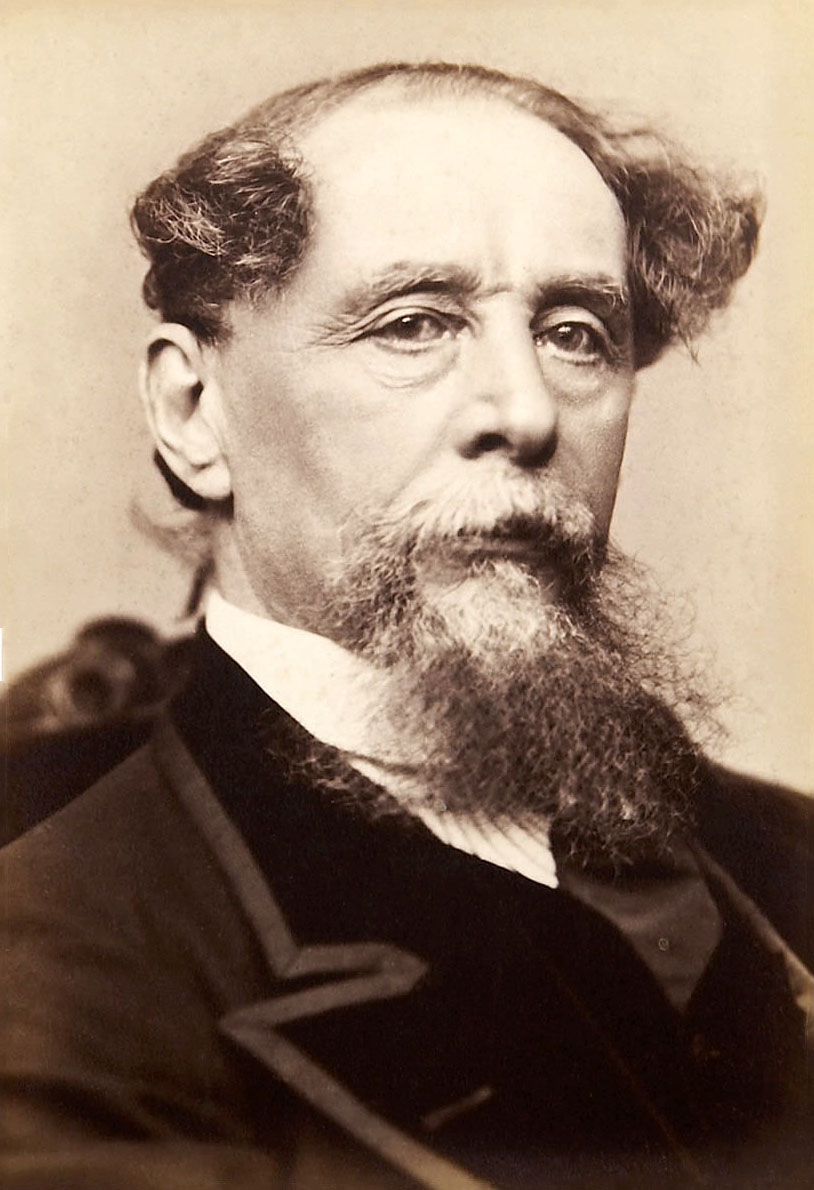
Charles Dickens Hates a Good Ending
| from here |
This is what drives me nuts about the Victorians (Dickens especially) and about the entire mystery-thriller genre. If all the loose ends tie into each other, something has gone wrong.
Charles Dickens hated good endings- he needed perfect endings, impossibly perfect endings in which (just as your life is about to be ruined by the cascade of your own bad decisions, like you deserve) your brother-in-law/ father figure steps in to save you, or else the woman you were going to rob who took you in and cared for you out of true Christian charity turns out to be your long-lost aunt.
Not always, but all too often, the author builds a brilliant house of cards, and I'm ready for the house to fall. The characters are making mistakes and poor decisions, and consequences are on their way. What will this mean? How will lives be ruined, and how would the strong recover?
And then the author pulls this nearly Deus Ex Machina garbage that results in a happy ending for everyone (or nearly everyone) involved, with as little actual heartbreak or sacrifice as necessary. I feel cheated of tragedy.
I'm gearing up for my review of Cutting for Stone, and I'm pleased to say that this lovely little book did not fall prey to the perfect ending. But for a little while I was worried.
Wednesday, May 16, 2012
Reaction to the Atlantic: Why Book Reviews Matter to Me
It's been a week since this article from the Atlantic made the rounds discussing online book reviews. I think, at this point, I agree with some of the argument there. I think that the digital age could save the book review, but only in as much as it allows the dedicated readers to find the reviewers able to speak to them.
First Predicate:
A book review should contain some analysis of what the author may have been trying to do. This might involve some plot summary and/or spoilers, but only if that furthers the examination of the book. While this doesn't necessarily require familiarity with the entire Western canon, the ability to compare the reviewed book to a similar book (thematically or structurally) would be useful.
As an alternative to the traditional book review, creative criticism is much more reader-centric. Just because I recognized the themes at work doesn't mean I enjoyed it. Hopefully, the evaluator gets to the point of identifying why the book fell flat. This is really an evaluation of my reaction as book reader, presented in a way that blurs the line between a book review and creative non-fiction.
Second Predicate:
What fills the pages at sites like Amazon and Goodreads and LibraryThing (which I use) are largely reader's evaluations. The "reviews" there rarely display the depth of either a book review or creative criticism. This is not to say that they're useless, just that they're useless to me.
Illustration:
I love baseball, but I hate baseball broadcasts. There's too much folksyism, too much pandering (this is especially true of national broadcasts, and triply true at playoff time). The more people the network execs hope to make like the broadcast, the less I enjoy it. Some of this rises from the fact that I am, at my core, a misanthrope (why else engage in a solipsistic activity like blogging?). But most of my resentment of national broadcasts rises from the fact that I already know a lot about baseball. The broadcasts are for the uninitiated, for the casual fan. That's not me.
First Predicate:
A book review should contain some analysis of what the author may have been trying to do. This might involve some plot summary and/or spoilers, but only if that furthers the examination of the book. While this doesn't necessarily require familiarity with the entire Western canon, the ability to compare the reviewed book to a similar book (thematically or structurally) would be useful.
As an alternative to the traditional book review, creative criticism is much more reader-centric. Just because I recognized the themes at work doesn't mean I enjoyed it. Hopefully, the evaluator gets to the point of identifying why the book fell flat. This is really an evaluation of my reaction as book reader, presented in a way that blurs the line between a book review and creative non-fiction.
Second Predicate:
What fills the pages at sites like Amazon and Goodreads and LibraryThing (which I use) are largely reader's evaluations. The "reviews" there rarely display the depth of either a book review or creative criticism. This is not to say that they're useless, just that they're useless to me.
Illustration:
I love baseball, but I hate baseball broadcasts. There's too much folksyism, too much pandering (this is especially true of national broadcasts, and triply true at playoff time). The more people the network execs hope to make like the broadcast, the less I enjoy it. Some of this rises from the fact that I am, at my core, a misanthrope (why else engage in a solipsistic activity like blogging?). But most of my resentment of national broadcasts rises from the fact that I already know a lot about baseball. The broadcasts are for the uninitiated, for the casual fan. That's not me.
Tuesday, May 15, 2012
Mothers in Literature Addendum
| from here |
Of course, I left out the fantastic mother in one of the books I was reading.
I just finished The Monsters of Templeton by Lauren Groff (on audiobook after spending Mother's Day with my mommy), and while the full review is still peculating and a day or two away, I want to spend just a minute thinking about Vi Upton: mother of the protagonist, single mom, ex-hippie turned Baptist, critical care nurse, and all-around Empress of Awesomeness.
Vi serves as catalyst and judge for the story. When her daughter, Willie, comes home from college pregnant and spiraling into the depths of a crisis of conscience, Vi pushes Willie into a full on identity crisis. Vi reveals that Willie is not the product of bad decisions in a free-love commune, but the child of a respected member of the Templeton community. She then sets Willie on a quest through the family history to learn the truth.
Vi is not perfect, and while she is put together enough that her quirks read as endearing more often than neurotic, there is certainly a touch of neurotic/ fanatic lurking under the surface to give Vi an edge.
Sunday, May 13, 2012
4 Mothers in Literature for Mother's Day
I'm currently devouring Cutting for Stone, and the mother of the twins who I presume will become the main characters has just died. Mothers in fiction are much like Disney moms- the good ones are all dead, and the few that aren't evil are plot devices.
So in honor of Mother's Day, here's the four best, living mothers I could think of from books I've read:
- Mrs. Murray from A Wrinkle in Time by Madeleine L'Engle- I haven't read this book in years, but I remember thinking Mrs. Murray seemed pretty cool. Any mother who cooks dinner over a bunsen burner gets an A from me;
- Becky Thatcher from Becky by Lenore Hart- one of my favorite books with a female protagonist because it mixes historical fiction and literary revisionism, Hart imagines the life of Tom Sawyer's one-time girlfriend;
- Hester Prynn from The Scarlet Letter by Nathaniel Hawthorne- speaking of getting an A (puns!), I think Hester Prynne deserves a lot more credit for patience and compassion with Pearl;
- Molly Weasley isn't quite as sainted as Harry Potter's mother, but she's pretty close. She might not always be believable (YA Fiction- eww) but I liked her.
What moms am I missing? What mothers are kind, patient, and still alive?
Thursday, May 10, 2012
Review of Local by Brian Wood and Ryan Kelly
![]() |
| from here |
Would you like the story? Could you trace uninterrupted growth, or would you find yourself backsliding into the old habits and same mistakes year after year?
These questions are woven throughout Local, written by Brian Wood and illustrated by Ryan Kelly. Intricate, lush and compelling, Local follows Megan McKeenan as she runs away from home and never stops running: each year brings her to a new city, a new set of struggles, the same old worries and fears.
This is my favorite kind of graphic novel: no superheroes, no doomsday devices, no trick endings. Wood and Kelly set out to depict life, and it is intricate and gorgeous and dirty.
Tuesday, May 8, 2012
Review of The Art of Fielding by Chad Harbach
I took a course in creative non-fiction as an undergrad, so long ago I didn't have any gray hair, so long ago that I took myself and my writing very seriously, so long ago that I didn't enjoy comma spliced run-on sentences. During this long ago undergrad course, I tried to write a piece about the feel of a minor league baseball game, but my family history kept getting in the way. That was the first time someone articulated to me "The Field of Dreams Problem": every baseball story is a story of fathers and sons.
The Art of Fielding tackles that problem and many others, too, with the subtle grace of a double play pivot- it is not effortless, the execution is not always flawless, but it possesses an intrinsic beauty that speaks deeply and vividly to anyone willing to devote the attention to appreciate it.
The story revolves around 5 main characters: Henry, the shortstop with the cannon arm and unmatched fielding prescience; Swartz, a hard-nosed catcher who recruited Henry for the college team; Henry's roommate, Owen, the gay outfielder drifting towards an affair with the college president; said president, possibly the most distinguished alumnus in the college's history; and, the president's brilliant high school dropout daughter, recently separated from her husband.
The Art of Fielding tackles that problem and many others, too, with the subtle grace of a double play pivot- it is not effortless, the execution is not always flawless, but it possesses an intrinsic beauty that speaks deeply and vividly to anyone willing to devote the attention to appreciate it.
The story revolves around 5 main characters: Henry, the shortstop with the cannon arm and unmatched fielding prescience; Swartz, a hard-nosed catcher who recruited Henry for the college team; Henry's roommate, Owen, the gay outfielder drifting towards an affair with the college president; said president, possibly the most distinguished alumnus in the college's history; and, the president's brilliant high school dropout daughter, recently separated from her husband.
Monday, May 7, 2012
Submit to Open Mic at Hazel & Wren
Hazel and Wren's monthly open mic is accepting submissions on Monday and Tuesday, in advance of the Wednesday Open Mic.
Last month, I submitted a draft of one of my National Poetry Month poems, and got some good advice on where to tighten up the piece. One of the many things I struggle with is deciding where to cut. I tend to write in large flourishes, then par down to the essentials, re-ordering and re-arranging as I go.
If you're the writerly sort, I encourage you to check it out.
Last month, I submitted a draft of one of my National Poetry Month poems, and got some good advice on where to tighten up the piece. One of the many things I struggle with is deciding where to cut. I tend to write in large flourishes, then par down to the essentials, re-ordering and re-arranging as I go.
If you're the writerly sort, I encourage you to check it out.
Saturday, May 5, 2012
Classifying Literature like Shakespeare
I've always been fascinated by literary genres.
Genre writing (and reading) serves as the bastard son to "serious" literature (that's pompously pronounced lit-re-choor, if you're trying to read this aloud).
What would happen instead, if we threw out Fantasy, Mystery, Thriller, Romance, and instead we divided all novels the way we divide Shakespeare's plays: comedy, tragedy, history.
There will be blends, of course. Richard II walks the line of tragedy, and The Merchant of Venice is a black comedy.
Where would your favorite genre books fall?
Watchmen is a tragedy, The Lord of the Rings must be a history through there's a fair amount of comedy, and Patrick Rothfuss' Kingslayer Trilogy is headed towards tragedy (though, with the third book still to be released, and with plenty of comic moments, it could end in comedy territory, but I doubt it).
Genre writing (and reading) serves as the bastard son to "serious" literature (that's pompously pronounced lit-re-choor, if you're trying to read this aloud).
What would happen instead, if we threw out Fantasy, Mystery, Thriller, Romance, and instead we divided all novels the way we divide Shakespeare's plays: comedy, tragedy, history.
There will be blends, of course. Richard II walks the line of tragedy, and The Merchant of Venice is a black comedy.
Where would your favorite genre books fall?
Watchmen is a tragedy, The Lord of the Rings must be a history through there's a fair amount of comedy, and Patrick Rothfuss' Kingslayer Trilogy is headed towards tragedy (though, with the third book still to be released, and with plenty of comic moments, it could end in comedy territory, but I doubt it).
Subscribe to:
Posts (Atom)