Tuesday, October 1, 2013

On Fables and Poems

I've lost my copy of Rudyard Kipling's Just So Stories. Most likely, I've lent it to someone, said, "You have to read this, you'll love it." And it's gone. I need to replace it and re-read it myself.

In many ways, the Just So Stories are the quintessential fables- origin stories that also impart a lesson. How did the elephant get his trunk? Why, by being too nosey (get it?) about what the crocodile had for dinner.

I often think of good poems as fables- little encapsulations of a moment or a feeling. They have an arc, a moral, and (at their best) an impossible moment that just feels right. It is human life distilled to its most essential ingredients.

I think about Robert Frost's Birches, which is one of the poems I've re-read and re-listened to most in my life. The impossible moment is perfect:
I'd like to get away from earth awhile
And then come back to it and begin over.  50
May no fate wilfully misunderstand me
And half grant what I wish and snatch me away
Not to return. Earth's the right place for love:
I don't know where it's likely to go better.
Without this moment, Birches is an old man wishing to be young again- to swing from trees, to have the innocence to believe that the bent birches along the road were brought low by being swung from too often. But because of the plea "May no fate wilfully misunderstand me" this a poem about a man who recognizes that for all life's hardships, for all the broken ice and slow thaws, no life could be better than this one.

I wonder who has my copy of Just So Stories. If I could remember, I could call them up and asked if they ever read it. I wonder if they love the stories' simplicity as much as I do?

Wednesday, July 17, 2013

Review: The Magic Barrel by Bernard Malamud

Bernard Malamud's first short story collection, The Magic Barrel, won the 1959 National Book Award. Does that make it a great book?

I am drawn to 20th and 21st century male writers, especially to Americans. In part, this must reflect the sexism of the publishing industry, especially early in the century. Partly, it must reflect a prejudice that I have (that most boys must have, or else why would the psuedonyms JK Rowling and SE Hinton and Franklin W. Dixon exist?).

In half-jest, when I last re-organized and pruned my books, I filled an entire bookcase with books about lonely men. Roth and Hemingway and Miller and Coetzee and Faulkner.

But I was disappointed by the lonely men populating Malamud's thirteen stories. Even those who have women in their lives don't know how to allow themselves to be helped. The women are either at home with the children ("Behold the Key"), harping about money ("The Bill"), laying in bed dying ("Angel Levine"), or prizes to be idealize, won or discarded ("The Magic Barrel," "The Lady of the Lake," and "The Girl of My Dreams," respectively).

Monday, June 24, 2013

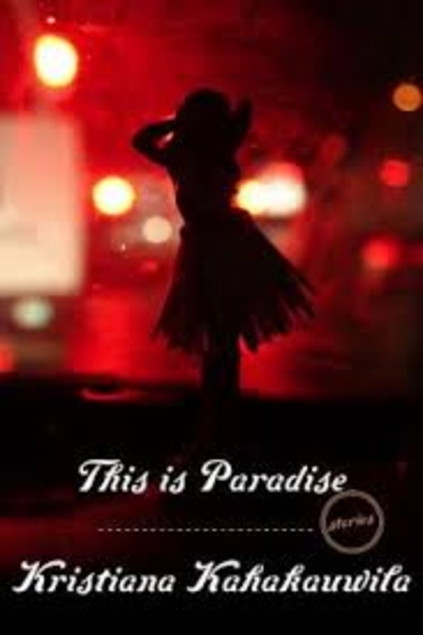
Review: This Is Paradise by Kristiana Kahakauwila

I have a tall stack of short story collections on the "to-read" shelf of my Bookcase of Unread Books. I've read a number of stunning short story collections in the last couple of years. The Girl in the Flammable Skirt, The Lone Surfer of Montana Kansas, Postcards, Natasha and Other Stories. None of them were as gut-wrenching, as multifaceted, as damn good as Kristiana Kahakuwila's This is Paradise.

Across six short stories (really, a couple of them, "This is Paradise" and "Portrait of a Good Father," could stand as novellas), Kahakuwila tracks the difference between outsider, native and local on the Hawaiian islands. This is a topic that has fascinated me for a number of years, since I read Zamora Linmark's Rolling the R's.

Race/ nativeness is a major force in Kahakuwila's Hawaii, though it can be overcome with proper respect and caution. In the title story, a guitar player moves from outsider to local in the course of one well-played song, buttressed by his reverence for his family and for the traditions he inherited from them. At the same time, a young girl is kept outside because she doesn't understand (really, can't begin to imagine) how "Paradise" looks to people who live there all the time and deal with tourists tromping through their home.

At the same time, Kahakuwila strikes universal notes of growth, assuming responsibilities, taking a role in the family in a number of her stories. Most of her characters are physically young, setting out on their lives: the girl on the prowl for a fling in paradise; another girl, an aspiring cockfighter following in her dead father's footsteps; a young man (Hawaiian heritage but a mainlander) preparing to propose to his local Hawaiian girlfriend; the granddaughter at her grandmother's funeral.  The rest are emotionally young: the closeted gay son home to watch his father die; the father and husband and lover who bottles up his emotions so deeply that he fails to be adequate in any role. Her men especially are properly stunted, as befits a hallmark tradition of American literature and film.

This Is Paradise goes on sale in July, and it deserves to be in your must-read pile.