Monday, October 28, 2013

Review: Daughter of Time by Josephine Tey

When I don't know, I turn to Wikipedia: 
In 2012, Peter Hitchens wrote that The Daughter of Time was "one of the most important books ever written."
On its publication Anthony Boucher called the book "one of the permanent classics in the detective field.... one of the best, not of the year, but of all time."
Dorothy B. Hughes also praised it, saying it is "not only one of the most important mysteries of the year, but of all years of mystery".
This book was voted number one in The Top 100 Crime Novels of All Time list by the UK Crime Writers' Association in 1990.
But why?

I am not a mystery reader, but The Daughter of Time came up in my book club, so I read it.

Most mysteries fall in one of two camps: the transparent mystery, where we know the guilty party by the end of the third chapter and merely mark time until the hero figures it out; or the deus ex machina mystery, where the hero has deduced some vital clue that is withheld from the readers until after the final confrontation (you could also call this The Sherlock).

Daughter of Time is neither of these. Our hero is bedridden, convalescing after being injured while capturing the last baddie. Stuck in his bed, Daughter... breaks one of the cardinals rules of story-telling: almost none of the action happens in front of us. Instead, characters enter the hospital room, tell the hero what's happened and then leave to have more adventures while hero stays home.

In this way, Daughter... has elements of psychological thriller and melodrama. I was far more interested in how the hero handled his incapacitation than I was in the mystery that he was engaged in.

Maybe we live too much in the reality tv era. CSI and Law & Order regularly take their fictional characters into contact with "real world" cases. But I'm sure this must have been a novel approach for a novel in 1951.

Is that what made reviewers hail Daughter... as an instant classic? Or is there something else I'm missing?

Thursday, September 19, 2013

Review: This Side of Paradise by F. Scott Fitzgerald

I've never loved The Great Gatsby. I have not yet seen the movie, though I might once it's on Netflix. Unlike one of my friends, I do not have a tattoo of the famous green light.

But Fitzgerald is so often held up as the epitome of his genre, and at a certain point it's hard to consider yourself a fan of 20th century American literature, particularly a fan of the literature that explores the construction of masculinity, if you've never picked up more of Fitzgerald than Gatsby and a few odd short stories.

This Side of Paradise left me cold, which I found charming. We are not supposed to like Amory Blaine, the brilliant but erratic con-man in training who is the novel's anti-hero. Money and power are the central movers of Amory's world, and the two spin around each other like water down a drain. The pursuit of both syphons all kindness from Amory, especially when his focus is power over the women he pursues.

Why would I like this book? It's misogynistic, materialistic, mean spirited. Amory is self-involved and self-aggrandizing. But I found This Side of Paradise funny.

I read it ironically, as a man in the 21st century should. Like Main Street (published the same year) or The Damnation of Theron Ware (written in 1896), Fitzgerald's characters are too much larger than life to be believable in the realist/ naturalist tradition. And, like other great works of satire, it robs the protagonist of any lasting triumphs.

Wednesday, August 28, 2013

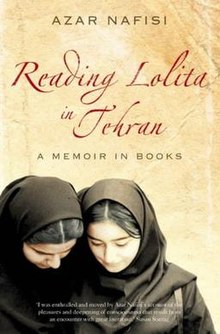
Reading Lolita in Tehran by Azar Nafisi

I dragged myself through Reading Lolita in Tehran by Azar Nafisi as part of the Freshman Reading Experience at the school where I work. The students I met with didn't even make it that far.

I wonder a lot about this book. The students Dr. Nafisi spend so much time with are obviously important to her. And, from a sociological standpoint, their struggle to create a personal space in the midst of one of the most oppressive regimes on Earth certainly has value.

But Dr. Nafisi's attempt to bring that struggle to life through the works of Nabokov, Fitzgerald, Austen and James left me cold. Reading Lolita in Tehran struggled to find its own identity- not quite enough about books and their ideas to captivate me, not quite enough a personal memoir to become open and accessible. Perhaps it is the most accessible book of its kind, but that is being damned by faint praise.

The thing RLiT  lacked most was a definitive moment of choice. It was, instead, a study in the daily struggle of life in a totalitarian state. Of course, this makes it true in a way literature can rarely afford to be true. I think of Saul Bellow's Dangling Man as the distillation of the Superfluous Man, and in RLiT, Nafisi repeatedly refers to herself as "irrelevant," a superfluous woman in a country violently opposed to her kind of womanhood.

This lack of "moment" christalyzed into repetition and self-referentialism. Some of her stories are repeated with little variation. Some of her ideas (like her irrelevance) are referenced several times before they are expanded on and explained. While the book mostly flows forwards chronologically, it takes occasional leaps that make it difficult to follow.

It didn't help my experience that I listened to most of the book while taking a trip for work. The audiobook is atrocious; the narrator speaks so slowly that the less than 400 pages of the book take 16 hours to trudge through.

Thursday, July 11, 2013

Review: The Twits by Roald Dahl

Children's books have been a car ride staple for our last few road trips, and on our recent trip down to North Carolina, we brought along Roald Dahl's The Twits.

It's a story about a truly awful husband and wife, who torment each other with horrid pranks. They also keep a family of monkey's prisoner and force them to stand on their heads all day long.

The great moment comes early in the book- Mr. Twit convinces Mrs. Twit that she has "The Shrinks." By gluing extra lengths of wood to her cane and chair each day, he tricks her into believing she is shrinking- that her head is collapsing into her neck, her neck into her body, her body into her legs; and that all that will be left of her is her shoes. This is revealed to be a lie, and Mrs. Twit plots her own revenge.

At the end of the book, after all the tricks and plots and plans, the neighborhood birds team up to destroy the Twits. The birds do it by attaching all the Twits' furniture to the ceiling, convincing the Twits that they need to stand on their heads in order to get right-way up. Once the Twits are standing on their heads, they are crushed under their own weight- their heads collapse into their necks, necks into torso, torso into legs.

The axiom runs that we are what we repeated do, and the Twits constant evil brought that evilness back to them. It's the very definition of poetic justice. Plus it was laugh out loud funny.

Tuesday, June 18, 2013

Review: Coraline by Neil Gaiman

It took me a long time to warm up to Neil Gaiman. He was one of those writers some of the guys I knew in college idolized. "Oh my god, you have to read American Gods, it's just great. It's sort of like Hercules meets Superman. I can't really describe it, you just have to read it."

I'll pass on anything that inspires that level of fanboyism. I'm never as impressed by the clever concepts and the inevitable deus ex machina plot twists.

But I finally couldn't avoid The Sandman, and I loved it. As a (stupendously long) graphic novel, it builds its own sturdy little universe. The way Sandman tucks itself into the comic book world you already know is a real joy to watch. And having a book (or movie or tv series) be self-supporting is important to me.

And that opened a door.

I had seen (and enjoyed) Coraline the movie, so for a recent road trip, Carol brought along the audiobook. We've found we really enjoy children's books in the car. Children's books are meant to be read aloud, so with a good narrator, they can really come to life.

The plot is largely the same: Coraline finds a door in her new house, and bored by her inattentive parents, she slips down the rabbit hole, where she meets the doting but domineering Other Mother. Coraline wants to leave, but the Other Mother has kidnapped Coraline's parents. To free them, Coraline must beat the Other Mother at a game of hide and seek.

What surprised me about the book was the how many fairytale tropes and childhood insecurities it really plays with. The fear of being ignored and forgotten. The challenge of making the wrong choice, of not knowing how to go on. The danger of being dissatisfied with life, and the danger of wishing for something different. How things are rarely what they appear to be.

Most of all, what I liked about Coraline was that it wasn't shy about being complicated. It's a big world, after all, and our decisions have consequences. Coraline made choices early on that she didn't really understand were choices, and then she had to deal with the ramifications. And life is like that, though I don't usually expect to see that kind of sentiment in a children's book. So maybe I liked Coraline because it wasn't really a children's book.

Thursday, May 23, 2013

Review: Ghost Map by Steven Johnson

Steven Johnson's Ghost Map was brilliant while it focused on the heart of its story: the unlikely collaboration between Dr. John Snow and the Reverend Henry Whitehead in combating London's recurring cholera outbreaks in the mid-nineteenth century.

Johnson steps deftly between the science and the sociology of the era; he explores the prejudices of the city's leaders, the moralistic and pseudo-religious views undermining theories about the spread of disease, and the technological advances accompanying London's transformation from an Elizabethan city to a modern metropolis.

Snow and Whitehead are fascinating men. A little bit Sherlock Holmes and a little bit Tetrius Lydgate, each provides the elbow grease that spurs a revolution in how we think about disease that can look, in retrospect, like the nexus of progress and good luck. Johnson shows us the hard work Snow and Whitehead put into their search for the cause and cure for cholera, which was for each of them, a consuming and noble hobby.

I recommend that story whole-heartedly.