It's been 2 weeks since I wrote anything here. Not that long, I suppose, but a lifetime for someone like me who is used to writing every day.
It's been a nice break. It will continue... and it won't...
I won't post here for the foreseeable future.
But if you want to talk baseball, come read what I'm writing at Pinstripe Alley.
And if you want to talk books, let's connect at Goodreads or LibraryThing, where I'll continue to post book reviews.

Connect


Tuesday, January 28, 2014

Saturday, January 11, 2014
Word of the Week
com·plete
kəmˈplēt/
adjective
- 1.having all the necessary or appropriate parts."a complete list of courses offered by the college"
- 2.(often used for emphasis) to the greatest extent or degree; total."a complete ban on smoking"
synonyms: absolute, out-and-out, utter, total, real, downright, thoroughgoing,veritable, prize, perfect, unqualified, unmitigated, sheer, arrant, full-outMore
Friday, January 10, 2014
Review: Andrew's Brain by E.L. Doctorow

Although Doctorow's novels have been hit or miss for me (enjoyed Ragtime and The March, loved Book of Daniel, couldn't finished World's Fair), I am always on board with the prospect of unreliable narrators and stories about story-telling. And Andrew's Brain offers us a doozy.
Andrew is a cognitive scientist with a capacity of self-inflicted wounds. He describes himself as a haphazard scholar, an indifferent lover and a compulsive shoot-from-the-hip decision maker. His life work studying the chemical miracle that makes the brain into the mind has left him without the superhuman deductive abilities he thinks such a study should bestow.
One of the things I like most about Andrew's Brain, especially compared to Doctorow's previous work, is the smallness of the cast. No personified masses in this novel; Andrew tells his story to someone he calls "Doc," who might be a psychiatrist or a prison warden or both. Andrew tells us about his two wives, and his two rivals for those women- his first wife's new husband, and his second wife's ex-boyfriend. The story told through dialogue, it has all the self-deprecating humor of Portnoy's Complaint without the sexual sensationalism.
As a small jab at modern literature, my wife and I divide our two bookcases of 20th and 21st century fiction: on the left are the lonely men, on the right are the awesome women. Like Roth's canon, Doctorow's newest work is the interior space of a lonely man, the kaleidoscopic tale he tells himself within the privacy of his head to keep trudging on in the world. Without giving too much away, Andrew's wounds are real, his trauma is rooted in the modern age. Andrew's story is told haphazardly, the punchline sometimes proceeding the joke, the aftermath often shown to us before the decision. It is, I think, about the way we piece our lives together and make sense of ourselves, even when that should be impossible.
30 Before 30: #19 DIY Night Stand
Technically, goal #19 on the original list was "Build a TV stand."
But something funny happened in May of this crazy year: we bought a house. And that changed a bunch of our priorities. In the 30 Before 30 Recap that I'm still writing, I use that excuse to explain away my failure to complete some of the higher ticket price items on my list like "Visit a new American metropolis" and "Go whitewater rafting."
But this goal just got changed a little. Instead of a TV stand for the office, a higher priority became a night stand for the bedroom.
So I built this:


 I am, I will admit, probably a little too proud of how this project came out. The drawers are only marginally functional, since the design I was working off of didn't have any hardware on its drawers, I didn't really think of it until later, and my drawers don't fill the drawer opening vertically as closely as they would have needed to in order to be self supporting. So I wound up going back and inventing in the final stage of the project...
In retrospect I should have disassembled my drawer boxes and cut the pieces down so that there was room for metal drawer slides. Instead, I used a piece of scrap would and a C shaped plastic slider to create a center, under drawer slider.
So the drawers are small (I knew that going in) and require two hands to open. Lesson learned. The piece compliments Carol's night stand pretty nicely (I built mine wider and deeper than the plan, to match the dimensions of the one on the other side of the bed).
And while I was a little sad to paint it black, I'm was happy to bring back some of the cherry that forms the legs and top by distressing the paint job.
So now I take the things I learned in this project, and maybe I can apply them to building that TV stand in the coming year.
But something funny happened in May of this crazy year: we bought a house. And that changed a bunch of our priorities. In the 30 Before 30 Recap that I'm still writing, I use that excuse to explain away my failure to complete some of the higher ticket price items on my list like "Visit a new American metropolis" and "Go whitewater rafting."
But this goal just got changed a little. Instead of a TV stand for the office, a higher priority became a night stand for the bedroom.
So I built this:
I am, I will admit, probably a little too proud of how this project came out. The drawers are only marginally functional, since the design I was working off of didn't have any hardware on its drawers, I didn't really think of it until later, and my drawers don't fill the drawer opening vertically as closely as they would have needed to in order to be self supporting. So I wound up going back and inventing in the final stage of the project...In retrospect I should have disassembled my drawer boxes and cut the pieces down so that there was room for metal drawer slides. Instead, I used a piece of scrap would and a C shaped plastic slider to create a center, under drawer slider.
So the drawers are small (I knew that going in) and require two hands to open. Lesson learned. The piece compliments Carol's night stand pretty nicely (I built mine wider and deeper than the plan, to match the dimensions of the one on the other side of the bed).
And while I was a little sad to paint it black, I'm was happy to bring back some of the cherry that forms the legs and top by distressing the paint job.
So now I take the things I learned in this project, and maybe I can apply them to building that TV stand in the coming year.
Thursday, January 9, 2014
Doctor Zhivago

The cinematography, as with Lawrence of Arabia, leaves me unimpressed though I am conscious of the historical context. It is the love story that moves me, and Zhivago gives me the insight into the title character that Lawrence was missing. I would have liked to see Zhivago complete his walk home from his mistress to return, at last, to his pregnant wife rather than being whisked away into his two-year adventure through Mongolia. I doubt Zhivago was the sort of man who could have kept his promise to disavow his mistress; he does not seem, to me, to be a strong enough man to deny himself the joys of a second life (which is, after all, exactly the sort of life poetry allows a writer- the chance to step away from the everyday and things as they are).
The story of displacement, of military and social conscription, was fantastic and probably deserves a longer meditation than I have time for today. It's the sort of story (like The Old Man and the Sea or American Pastoral) that I could see as a touchstone.
Wednesday, January 8, 2014
Giving Up on Goal #2
One thing that is clear to me, is that I was a bit... let us say "overambitious" for my 30 Before 30.
If I had really given the two books their due, they would each have been a separate item on a list of 30. It's not that I couldn't have read these four books within a year, but that I couldn't have read them and still kept up with all my other reading, the new and forthcoming books, the old favorites, the suggestions from friends. I wasn't willing to give that up.
So perhaps Darkness at Noon and Sons and Lovers will make my 31 Before 31.
2. Finish the Modern Library's Top 10 List
I've read six of the top ten in the Modern Library's Top 100. This year, I want to read the other four: Ulysses, The Sound and the Fury, Darkness at Noon, and Sons and Lovers.In the last year, I've read The Sound and the Fury and Ulysses.
If I had really given the two books their due, they would each have been a separate item on a list of 30. It's not that I couldn't have read these four books within a year, but that I couldn't have read them and still kept up with all my other reading, the new and forthcoming books, the old favorites, the suggestions from friends. I wasn't willing to give that up.
So perhaps Darkness at Noon and Sons and Lovers will make my 31 Before 31.
Saturday, January 4, 2014
Word of the Week
aus·pi·cious
ôˈspiSHəs/
adjective
- 1.conducive to success; favorable."it was not the most auspicious moment to hold an election"
synonyms: favorable, propitious, promising, rosy, good, encouraging; More

Friday, January 3, 2014
Tuesday, December 31, 2013
30 Before 30 Reflection: Monthly To-Do Lists
New Year's Eve seems like the right time to reflect on a year, and #30 on my 30 Before 30 was to make and keep monthly to-do lists of projects around the house.
This ambition took on added significant in May when we bought a house. Funny how the "to-dos" pile up quickly.
I wasn't as diligent about keeping a written list as I might have been. Though, one result of this goal is that I now keep a pad of paper in my car, since Carol and I make most of our to-do lists while driving. It's a fun little exercise, and I suppose being away from home makes it easier to reflect on what needs to be done without racing off to do it.
The things we've done that made it onto various lists have ranged from the simple and mundane (pick up the bedroom and living room) to the ambitious (paint the shutters and front door) to the complicated (organize the linen closet led to re-organizing storage in the bedroom, the guest room and both bathrooms) to the skill building (replace all the dingy off-white switches and outlets in the house with new, white ones).
I may not have kept this goal as fastidiously as I'd have liked, but it's the one thing from my 30 Before 30 that really improved my life. And it's simple enough that I'd really encourage you to try it. It's so easy to look at a day spent cleaning or organizing or working around the house as a day lost, but it's not. Just 4 or 5 things each month really left us feeling accomplished and it helped us keep track of how much we achieved.
This ambition took on added significant in May when we bought a house. Funny how the "to-dos" pile up quickly.
I wasn't as diligent about keeping a written list as I might have been. Though, one result of this goal is that I now keep a pad of paper in my car, since Carol and I make most of our to-do lists while driving. It's a fun little exercise, and I suppose being away from home makes it easier to reflect on what needs to be done without racing off to do it.
The things we've done that made it onto various lists have ranged from the simple and mundane (pick up the bedroom and living room) to the ambitious (paint the shutters and front door) to the complicated (organize the linen closet led to re-organizing storage in the bedroom, the guest room and both bathrooms) to the skill building (replace all the dingy off-white switches and outlets in the house with new, white ones).
I may not have kept this goal as fastidiously as I'd have liked, but it's the one thing from my 30 Before 30 that really improved my life. And it's simple enough that I'd really encourage you to try it. It's so easy to look at a day spent cleaning or organizing or working around the house as a day lost, but it's not. Just 4 or 5 things each month really left us feeling accomplished and it helped us keep track of how much we achieved.
Monday, December 30, 2013
30 Before 30: Lawrence of Arabia

In part, I blame the pacing. Clearly, my modern sensibility can't handle a 4+ hour movie, and that's way too long for Carol to take in a single sitting. It took us three sessions to watch the whole movie.
But the second piece, the part I find counter-intuitively disturbing, is how post-modern the film felt. Lawrence achieves super-human heights rallying the Arabs to oppose the Turks and their German allies. He also endures tremendous lows, trying and failing to forge a Western democracy among the tribes, not anticipating their cruelty to each other or their conquered foes in the prison camp, and encouraging their lowest impulses in "taking no prisoners" when faced with the retreating marauders (who had committed war crimes of their own).
What disturbed me was how little insight we have into Lawrence. We see the things he does, but that tells us almost nothing of the man and his motives. Is he a supreme egotist, a genius, a lunatic? We can guess, but we know nothing definitively. And perhaps that dates the film- that David Lean was unwilling to fictionalize further in his epic biopic. What makes it hard for me to approach is that, in fiction, this is precisely the kind of story I treasure.
The cinematography was, of course, stunning. I can see the wide pan approach echoed in everything from Lord of the Rings to Inception. But, given modern access to images from around the globe, the cinematography can't be the main draw for me. The story, the characters, have to win out. And in Lawrence of Arabia, I couldn't quite decide if I was watching the story of a hero.
Sunday, December 29, 2013
Review: The Guermantes Way
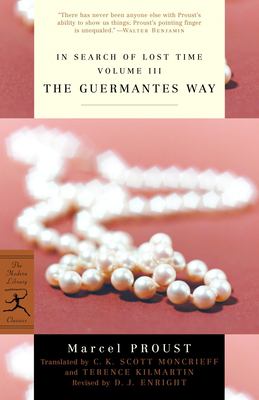
More importantly, would the third book of Proust's In Search of Lost Time have scuttled my entire project to read his masterpiece?
The Guermantes Way was a bit like reading Leviticus (which I did in a different phase of self-abuse). It was dull, obsessively detailed, and light on characters. To be sure, Proust fills his book with important people, but they are people who were (I think) more important to the world outside the book or (I can hope) will be more important in later chapters.
The most valuable characters in this volume seem to be the grandmother, who does little but die and whose death doesn't impact the Narrator in quite the way I'd have hoped, and Albertine, who returns but is much less interesting than I found her in Within a Budding Grove.
Maybe my disappointment comes from growing to dislike the Narrator's social climbing and the incumbent attention to heritage. At the conclusion of The Guermantes Way, I certainly feel ready to write a screed against the bourgeois excesses of early 20th century France. These people are society, but they seem to do nothing, contribute nothing, and know nothing more than their own petty social caste.
And maybe my disappointment comes from the Narrator's growing dominance of the story arc. My favorite chapter to date has been "Swann in Love" from Swann's Way, and closely following it, the passages from the end of Within a Budding Grove featuring Albertine, Andree and Gisele. The Narrator needs to share the stage.
Saturday, December 28, 2013
Word of the Week
en·er·vate
verb
past tense: enervated; past participle: enervated
ˈenərˌvāt/
- 1.cause (someone) to feel drained of energy or vitality; weaken.
synonyms: exhaust, tire, fatigue, weary, wear out, devitalize, drain, sap, weaken,enfeeble, debilitate, incapacitate, prostrate; More

Friday, December 27, 2013
Tuesday, December 24, 2013
30 Before 30: Visit the National Aquarium
Since visiting Baltimore and the National Aquarium and taking photos of things all occupy important (and acheivable) spots on my 30 Before 30, here's a few pictures from our recent trip to the National Aquarium!
Monday, December 23, 2013
Saturday, December 21, 2013
Word of the Week
ex·pe·di·tion
ˌekspəˈdiSHən/
noun
- 2.informala short trip made for a particular purpose."a shopping expedition"

Friday, December 20, 2013
Tuesday, December 17, 2013
Review: Monster on the Hill by Rob Harrell

The monster Rayburn isn't particularly excited about his job terrorizing the people of Stoker-on-Avon. But terror is big business in this Victorian world, and the town fathers enlist a local inventor to prod Ray into action. With a tag along urchin in tow, the trio set out to visit one of Ray's old school buddies to help restore Ray's self-confidence.
Unfortunately, while out of town, a real monster shows up. Ray and his friends must race back to Stoker-on-Avon to deal with the crisis.
A children's story with the right mix of morals and hijinx, my favorite part of Monster on the Hill was the brilliantly drawn world Ray and his friends inhabit. With bold colors and odd shapes, Harrell builds a Seuss-like world filled with quirks and just enough magic to keep the readers on their toes.
Saturday, December 14, 2013
Word of the Week
trav·e·logue
ˈtravəˌlôg,-ˌläg/
noun
- 1.a movie, book, or illustrated lecture about the places visited and experiences encountered by a traveler.

Subscribe to:
Posts (Atom)